Jump in the Fun, Love Every Mile



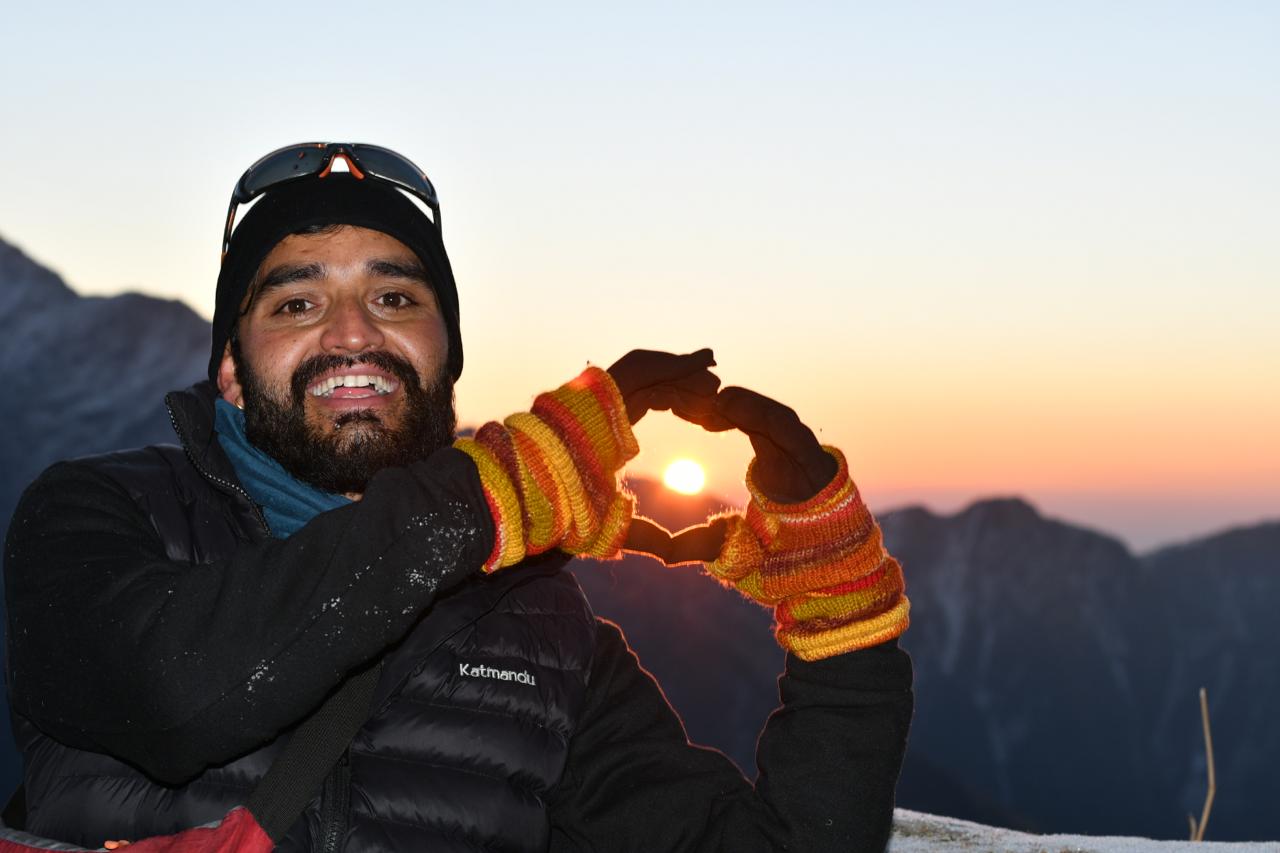
My name is Anjan Dhital, and I was born and raised in Aijarkot–2, Kharibot, in the Gorkha district of Nepal. I come from a simple rural background where life has never been easy, but where values like hard work, honesty, respect for others, and responsibility are deeply rooted in everyday living. Growing up in a village meant learning to struggle early. Roads were few, facilities were limited, and opportunities did not come easily. However, nature was always close to us. Mountains, forests, rivers, and long walking trails were part of daily life, and these surroundings slowly shaped my connection with the Himalayas long before I understood that trekking and guiding could become my profession.
As a young person, I saw many people from my village leave home in search of work. Some went to cities, some went abroad, and some chose labor work in tourism. Life taught me early that survival requires effort, and dignity requires patience. I was never afraid of physical work, and I learned to accept challenges without complaint. These early experiences prepared me mentally for the difficult path that I would later follow as a trekking guide.
In 2013, I took my first step into the trekking world. I started as a porter, which is the most basic and physically demanding role in trekking. At that time, I had no special skills, no strong connections, and no clear future plan. I only had my strength, determination, and willingness to learn. Carrying heavy loads through steep trails, crossing suspension bridges, walking long hours in cold and rain, and sleeping in basic lodges became my daily routine. Porter life is not easy, and many people underestimate how difficult it is. It tests both the body and the mind.
During my three years as a porter, I learned many important lessons that no classroom could teach. I learned discipline by waking up early every day. I learned teamwork by walking together with other porters and guides. I learned responsibility by understanding that clients depended on us for their safety and comfort. I also learned humility, because porter work often goes unnoticed, even though it is essential. Instead of feeling discouraged, I observed carefully. I watched how professional guides communicated with tourists, how they explained culture and mountains, how they managed altitude sickness, and how they solved problems calmly. Slowly, my dream began to form. I did not want to remain a porter forever. I wanted to become a trekking guide.
In 2016, I took an important step toward that dream by completing my trekking guide training. This training gave me formal knowledge about trekking safety, first aid, altitude sickness, leadership, route planning, and environmental responsibility. I felt proud to hold a guide certificate, and I believed that my future would now improve. I was confident that my hard work as a porter and my training as a guide would open doors for me.
However, real life did not change as quickly as I expected. After completing my training, finding guide work was extremely difficult. Many trekking companies prefer guides who already have many years of guiding experience or strong personal connections. As a new guide, I was often ignored or asked to wait. Some companies offered me porter work instead of guide roles. Others promised opportunities that never came. This period was emotionally challenging for me. I had the skills, the motivation, and the passion, but I lacked opportunities.
Despite this, I did not give up. I continued visiting trekking companies again and again. I introduced myself personally, shared my experience, and showed my willingness to work hard. Over time, I managed to work with several trekking companies, including Green Valley, Himalaya Encounter, Welcome Nepal, and Top of the World Adventure. Joining these companies gave me exposure and experience, but the work was still unstable. Trekking in Nepal is seasonal, and competition among guides is very high. Some seasons were good, but other seasons brought very little work.
This instability affected my life deeply. There were times when I felt sad, frustrated, and uncertain about my future. I wanted stability, respect, and a chance to grow professionally, but tourism did not always provide that. Like many Nepali youths, I started thinking about foreign employment. I believed that working abroad might help me earn money and support myself better.
With this hope, I went to Qatar to work. I stayed there for one year and worked in a supermarket. The reality of foreign labor was much harder than I expected. I worked up to sixteen hours a day, often without proper rest. There were no regular holidays, and the working environment was physically and mentally exhausting. Even worse, the salary was not always paid fully or on time. After five to six months of continuous hard work, my body and mind were completely tired.
I requested holidays, hoping to recover my health, but my request was rejected. At that moment, I realized that money alone is not enough if dignity and health are lost. I understood that this life was not for me. It was a very difficult decision, but I chose to return to Nepal. Leaving foreign employment without financial success was painful, but it was an honest decision made for my well-being.
After returning to Nepal, I restarted my trekking career. Being back in the mountains made me feel alive again, but the challenges remained the same. Trekking work was still seasonal, and income was still uncertain. To survive, I accepted different jobs during the off-season. I worked as a security guard, a waiter, and a salesman. These jobs helped me manage daily expenses, but they were never my passion. No matter what work I did, my heart always remained in trekking and guiding.
The COVID-19 pandemic became one of the hardest periods of my life. Tourism completely stopped, and there were no trekkers at all. For many months, there was no income from trekking. Like many people, I faced uncertainty and fear about the future. However, I did not want to sit idle. During this time, I started working as a teacher in Bhujung, Lamjung. Teaching was a new experience for me, and I worked there for two years.
Teaching taught me patience, communication, and responsibility in a different way. I felt proud to support children during such a difficult time. Even though the salary was low, the work had meaning. I learned that helping others can give strength even in hard times. When trekking seasons slowly started again, I continued guiding whenever opportunities appeared while still supporting myself through teaching.
Over the years, I have trekked and guided in many major regions of Nepal. I have worked in the Everest region, Annapurna region, Manaslu region, Kanchenjunga region, Langtang region, and Ganesh Himal region, along with many other areas. Each region taught me different lessons. Everest taught me respect for altitude and discipline. Annapurna showed me cultural diversity and community life. Manaslu and Kanchenjunga taught me endurance and patience in remote areas. Langtang and Ganesh Himal taught me resilience and recovery after disaster.
To improve myself further, I completed basic mountain rock climbing training and Mountain Rock Climbing Level 1 training. These trainings helped me understand technical climbing, rope work, safety systems, and risk management. My long-term dream is to become a professional mountain guide. I understand that this goal requires time, continuous training, financial planning, and physical and mental preparation.
My main life goal is to climb Mount Everest in 2028. This is not just a dream; it is a serious plan. Before attempting Everest, I want to gain more experience, build strong networks, meet more climbers, and improve my skills step by step. I believe that rushing in the mountains is dangerous, and patience is essential.
Helping people has always been important to me. I have been involved in small social activities in my community whenever possible. I try to support people with advice, encouragement, and honest guidance. I believe that success has real value only when it can help others. I live a simple life and believe in honesty, respect, and effort. My journey has been slow, but it is real and meaningful.
I speak Nepali and English fluently. I also speak German and a little Spanish. Language skills help me connect with people from different cultures, and I enjoy sharing correct and honest information about Nepal, its mountains, culture, and people. I believe that guiding is not just leading people on trails but also representing my country responsibly.
My life has been full of struggle, learning, and perseverance. I have faced rejection, physical exhaustion, financial instability, and uncertainty. However, I have never lost my love for the mountains. Trekking and guiding are not just my profession; they are my identity. Step by step, I continue moving toward my goal of becoming a mountain guide and standing one day on the summit of Mount Everest with dignity, experience, and responsibility.