

Safety Tips for Mera Peak Climbs
- June 23, 2026
Introduction to Mera Peak
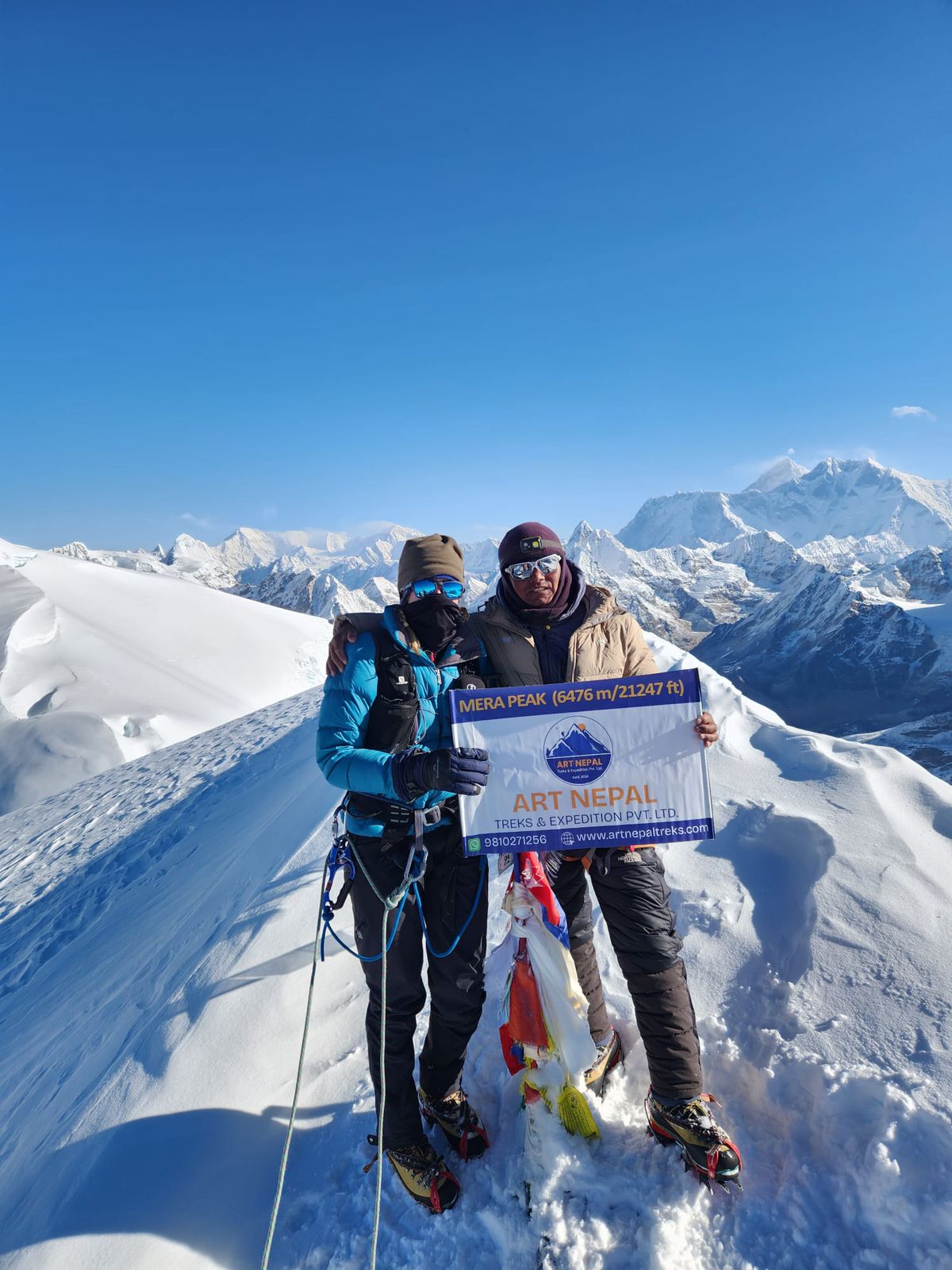
Mera Peak is located in the Mahalangur section of the Himalayas, within the Sagarmatha National Park—a UNESCO World Heritage Site. The mountain actually comprises three distinct summits: Mera North (6,476m), Mera Central (6,461m), and Mera South (6,065m). Most climbers aim for the Central summit, which offers the most accessible route while still providing spectacular panoramic views.
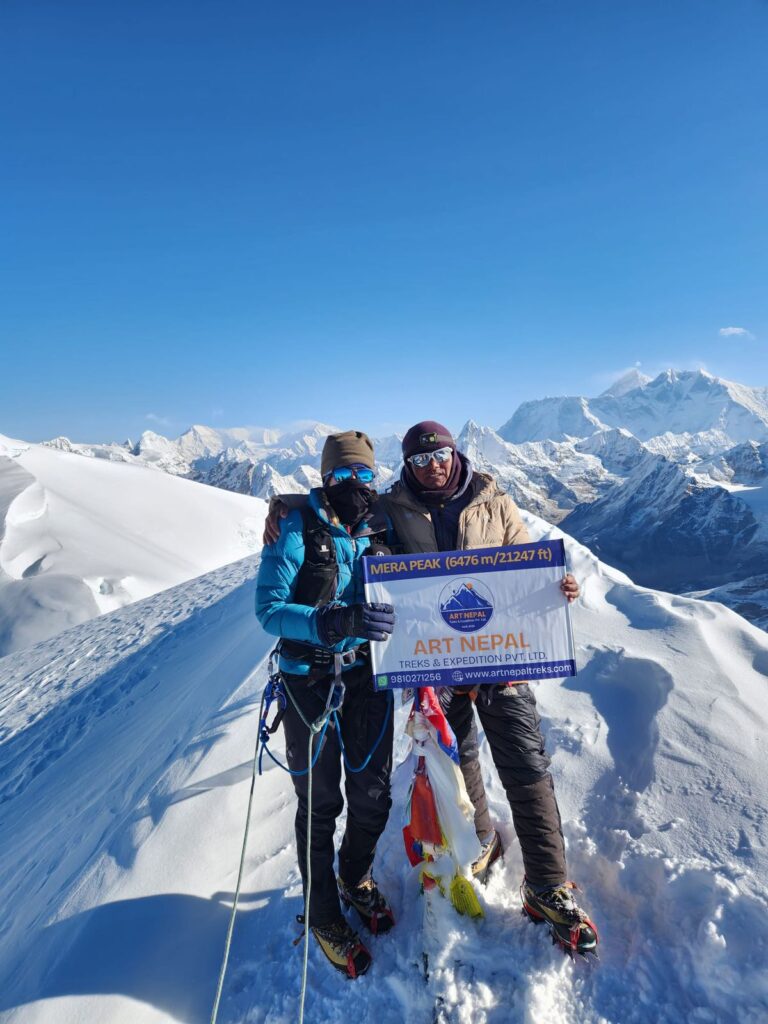
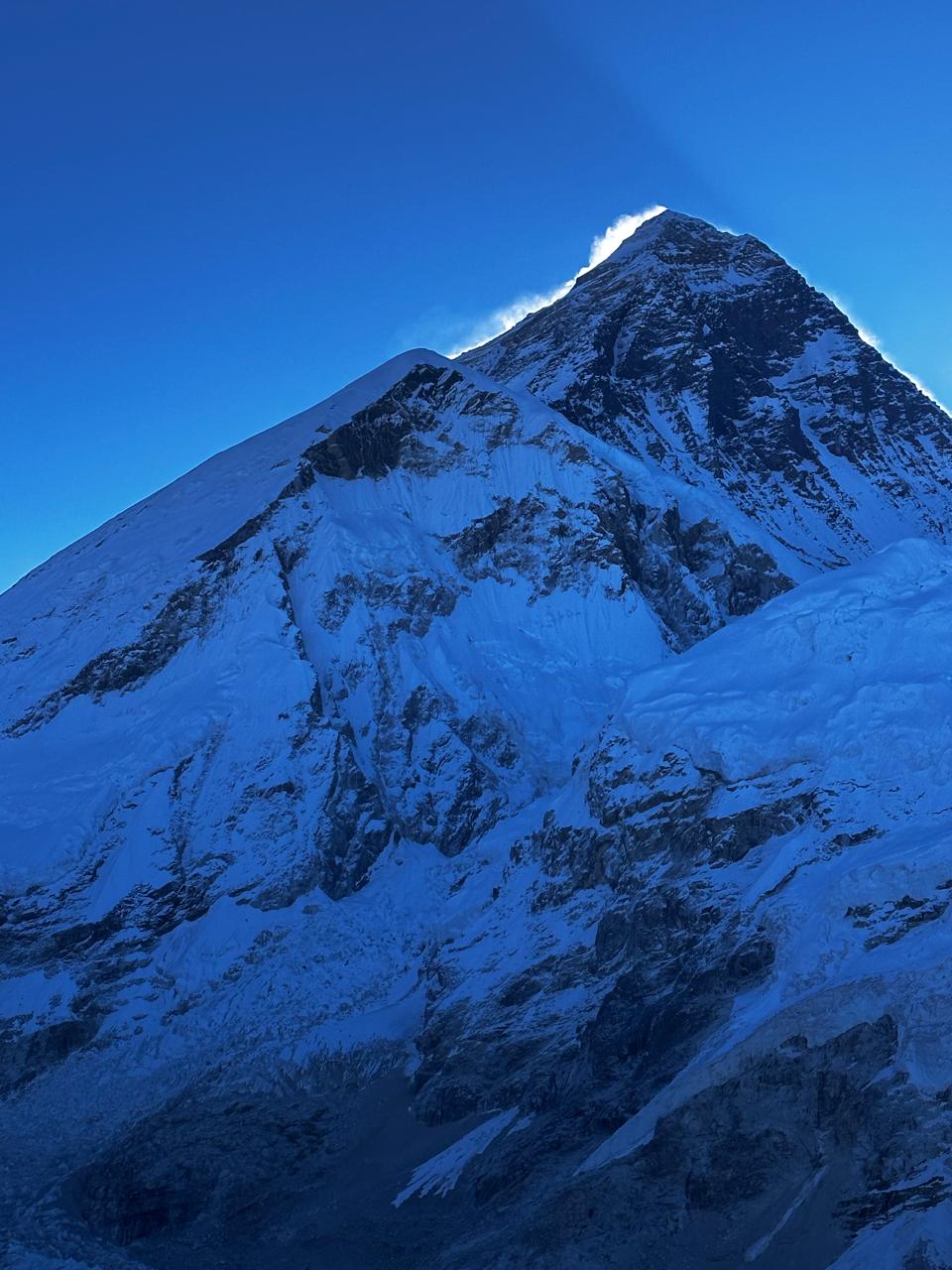
What makes Mera Peak particularly special is its position. From the summit, climbers are treated to a breathtaking 360-degree view that includes five of the world’s six highest peaks: Mount Everest (8,848m), Kangchenjunga (8,586m), Lhotse (8,516m), Makalu (8,485m), and Cho Oyu (8,188m). This Himalayan spectacle is one of the most rewarding views any mountaineer could hope to witness.
Why Choose Mera Peak?
For Beginners and Experienced Climbers Alike
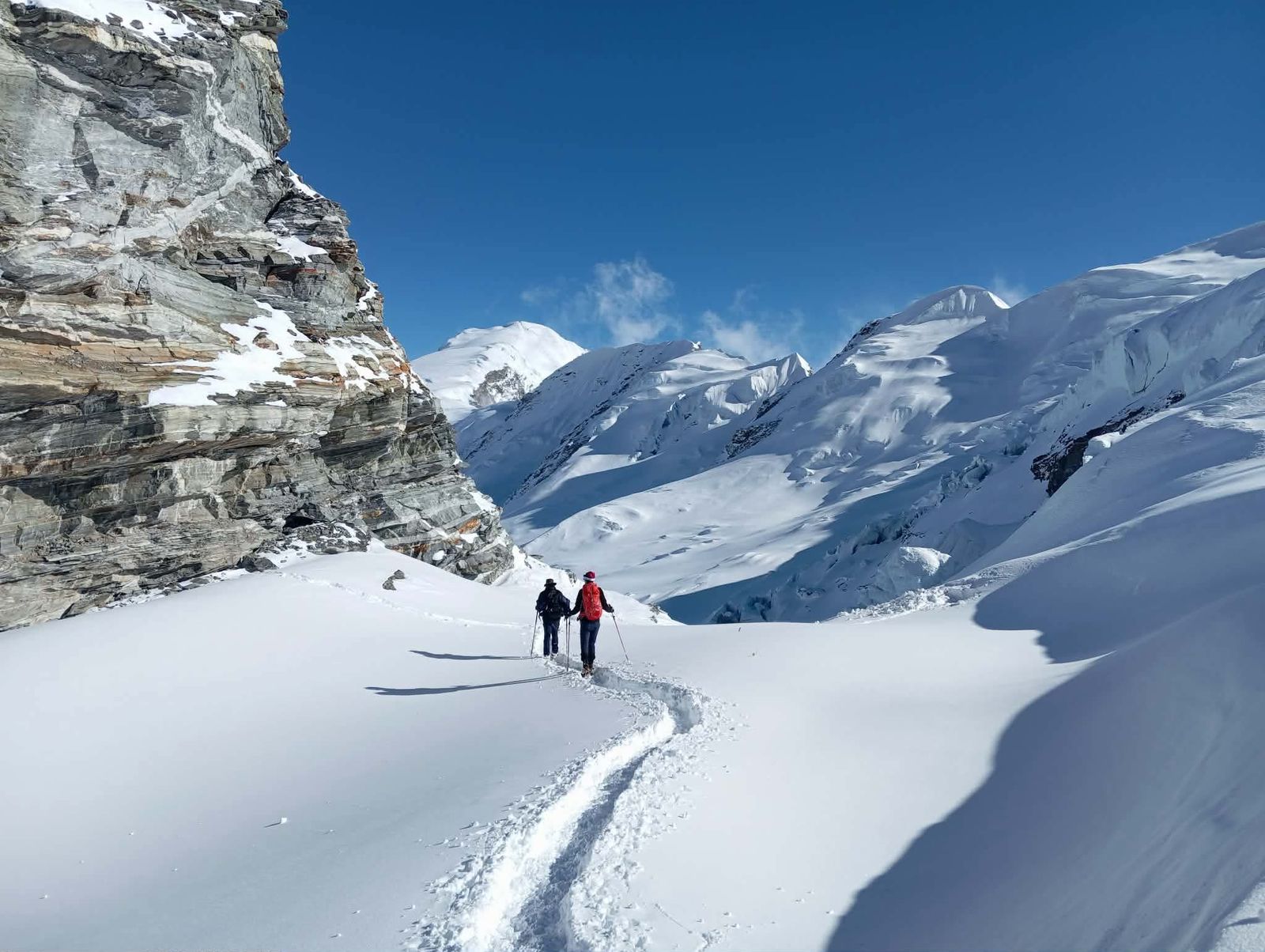
Mera Peak strikes a perfect balance between challenge and accessibility. It is classified as a “trekking peak” by the Nepal Mountaineering Association, meaning it doesn’t require advanced technical climbing skills. The route primarily involves snow and glacier travel with some steep sections, but no technical rock climbing is necessary.
For beginners, Mera Peak offers the opportunity to experience a high-altitude Himalayan summit without the overwhelming technical demands of peaks like Everest or Lhotse. With proper preparation, guidance, and a solid fitness level, first-time climbers can successfully summit Mera Peak.
For experienced climbers, it provides a chance to test skills at high altitudes while enjoying the rewards of a non-technical climb. It serves as excellent preparation for bigger expeditions to peaks above 7,000 meters.
The Mera Peak Experience
The journey to Mera Peak is not just about the summit—it’s a complete Himalayan experience. The trek takes you through diverse landscapes, including:
• Rhododendron and pine forests that burst into vibrant color during spring
• Bamboo-filled valleys with lush vegetation
• Alpine meadows and high-altitude yak pastures
• Traditional Sherpa villages where time seems to stand still
• Snow-covered ridgelines and glacial basins that test your endurance
• Flora and Fauna Along the Trail
The Mera Peak route passes through the Makalu Barun National Park and Sagarmatha National Park, both renowned for their rich biodiversity.
Flora
The lower elevations of the trek feature dense forests of rhododendrons, juniper, fir, and Himalayan birch. During the spring season (March to May), the rhododendrons bloom in spectacular shades of red, pink, and white, creating a magical landscape that trekkers will never forget. As you gain altitude, the vegetation transitions to alpine shrubs and hardy plants adapted to the harsh mountain environment.
Fauna
The region is home to several rare and endangered species, including:
• Snow leopards – elusive and rarely spotted, these magnificent cats inhabit the high altitudes
• Red pandas – found in the forested areas at lower elevations
• Himalayan black bears – occasionally seen in the rhododendron forest
• Musk deer – prized for their musk, these shy creatures inhabit the alpine regions
• Himalayan tahr – wild goats that navigate the steep cliffs with remarkable agility
• Bird enthusiasts can spot species like the Himalayan snowcock and bearded vultures soaring through the mountain skies.
The Route and Trekking Itinerary
Standard Route (Lukla Approach)
The classic route begins with a flight from Kathmandu to Lukla, the gateway to the Everest region. From there, the trail winds through the remote Hinku Valley, offering spectacular scenery and a more peaceful experience compared to the crowded Everest Base Camp trail.
Here is a typical 16-day itinerary for Mera Peak climbing:
Day Route Altitude Highlights
1 Kathmandu 1,400m Gear check, briefing, and preparations
2 Fly to Lukla, trek to Chutok 2,800m Mountain flight, forest paths
3 Trek to Pangkoma 2,846m Farmland, rhododendron forests
4 Trek to Ningsow 2,846m Pangkongma La pass, Hinku Valley views
5 Trek to Chhatra La 2,800m Forest trails, remote settlements
6 Trek to Kothe 3,691m River valleys, fir and bamboo forests
7 Trek to Thaknak 4,358m Yak pastures, above tree line
8 Acclimatization at Thaknak 4,358m Rest day, optional hike to Sabai Tsho Lake
9 Trek to Khare 5,045m Glacier views, last village before summit push
10 Training Day 5,045m Crampon and ice axe practice
11 Trek to High Camp 5,780m Ridge climb, stunning views
12 Summit Day, return to Khare 6,461m Early start, 8-10 hours
13 Spare Day Variable In case of weather delays
14 Trek to Kothe 3,691m Descend through forests
15 Trek to Chhatra La 2,800m Re-trace steps
16 Trek to Lukla 2,860m Final stretch
Alternative Route Options
Some itineraries offer a more scenic but longer route that provides better acclimatization opportunities. These alternative routes spend more time in the remote Hinku Valley, allowing for a more gradual ascent and better adjustment to the altitude.
Difficulty and Technical Requirements
Grading and Challenge Level
Mera Peak is classified as PD+ (Peu Difficile Plus) on the Himalayan Alpine Climbing Grade System. This rating indicates that while the climb requires basic mountaineering skills, it does not involve technical rock climbing. On a difficulty scale of 0-10, Mera Peak typically falls between 7 and 8, making it a moderate to strenuous climb accessible to those with beginner-level experience and good physical fitness.
Technical Skills Required
While Mera Peak is considered non-technical compared to major expeditions, climbers must be competent with:
• Crampon usage – walking and ascending on snow and ice
• Ice axe handling – for balance and self-arrest techniques
• Rope travel – glacier travel with fixed ropes on steeper sections
• Use of ascenders (jumars) – on the final summit ridge
These skills are taught during the training day at Khare, where guides provide hands-on instruction and practice sessions.
Physical Fitness Requirements
The real challenge of Mera Peak lies in its altitude and the physical demands of the climb, not technical difficulty. Climbers should:
- Engage in cardiovascular exercise 4-6 days per week (hiking, running, cycling, swimming)
- Strengthen legs, core, and back through squats, lunges, and plank
- Practice stair climbing with a loaded backpack (8-12kg)
- Train for back-to-back days of sustained effort
- Include downhill training to protect knees on the descent
- Prior high-altitude trekking experience, preferably above 5,000 meters, is highly recommended for success on Mera Peak.
Altitude and Acclimatization
Understanding Altitude Sickness
The maximum elevation of Mera Peak (6,476m) means that altitude sickness is a significant concern. Symptoms can include headache, nausea, vomiting, dizziness, loss of appetite, and sleep disturbances. In extreme cases, unconsciousness and hallucinations may occur.
Acclimatization Strategy
Proper acclimatization is essential for a successful summit attempt. The itinerary is designed with several days at moderate altitudes to allow the body to adjust:
Thaknak (4,358m) – A full acclimatization day with an optional hike to Sabai Tsho Lake
Khare (5,045m) – Training day before the summit push
Climb high, sleep low – The standard approach for safe altitude gain
Guides carry essential supplies like Acetazolamide (Diamox), oximeters, and necessary medical equipment to monitor climbers’ oxygen saturation levels.
Weather and Best Time to Climb
Spring Season (March to May)
Spring is widely considered the best time to climb Mera Peak. The weather is stable, days are longer, and temperatures are milder.
Month Temperature Range Conditions
March -8°C to 10°C Early spring thaw, clear days, cold nights
April -5°C to 15°C Stable weather, rhododendrons blooming, popular
May -3°C to 20°C Warmest spring, pre-monsoon clouds possible
Advantages of Spring:
Rhododendron forests in full bloom
Clear skies and excellent visibility
Stable weather patterns
Warm daytime temperatures at lower elevations
Autumn Season (September to November)
Autumn is the second-best season and ideal for mountain photography. The post-monsoon air is crisp and clear, offering the most spectacular views.
Month Temperature Range Conditions
September 0°C to 12°C Early autumn, residual showers improving
October 5°C to 15°C Ideal weather, crisp air, cultural festivals
November -5°C to 12°C Cold nights, fewer trekkers
Advantages of Autumn:
Crystal-clear mountain views
Dry trails and stable weather
Cultural festivals like Dashain and Tihar
Less crowded than spring
Winter (December to February) and Monsoon (June to August)
Winter climbing is possible but extremely challenging, with temperatures dropping to -25°C or lower at higher elevations. Heavy snow, short daylight hours, and increased avalanche risk make this season suitable only for experienced alpinists.
The monsoon season (June to August) is generally not recommended due to heavy rainfall, slippery trails, landslides, and poor visibility.
Cultural Highlights and Sherpa Heritage
One of the most enriching aspects of Mera Peak climbing is the opportunity to immerse yourself in Sherpa culture.
Traditional Villages
The trail passes through several authentic Sherpa villages including Paiya, Thaknak, Khare, and others. These settlements offer a glimpse into a way of life that has remained largely unchanged for centuries. Villagers still practice traditional agriculture, animal husbandry, and trade, while maintaining their rich Buddhist heritage.
Monasteries and Gompas
Ancient monasteries and gompas dot the landscape, serving as spiritual centers for the local communities. These sacred sites feature colorful prayer flags, intricate thangka paintings, and the peaceful sound of chanting monks.
Local Festivals and Traditions
Depending on the timing of your climb, you may witness local festivals such as:
o Lhosar – Tibetan New Year, celebrated with dancing and feasting
o Dashain – Nepal’s biggest Hindu festival in autumn
o Tihar – Festival of lights, following Dashain
o Sherpa hospitality is legendary, and staying in local teahouses provides opportunities to share meals, stories, and laughter with your hosts.
Equipment and Packing List
Proper gear is essential for a successful and safe Mera Peak climb. Here’s a comprehensive packing list:
Clothing
Category Items
Base Layers Moisture-wicking thermals (merino wool or synthetic), 2 pairs synthetic long johns (midweight and expedition weight)
Insulation Fleece jacket, lightweight down mid-layer, additional warm sweater
Outer Shell Waterproof/windproof jacket and pants (Gore-Tex or similar)
Down Jacket Rated to at least -20°C (-4°F) for summit day
Trekking Pants Breathable synthetic material, quick-drying
Headwear Warm fleece hat, sun hat, balaclava/buff
Handwear Liner gloves, insulated outer gloves/mittens, expedition weight gloves
Footwear Waterproof trekking boots (broken-in), mountaineering boots for summit day, camp shoes
Technical Gear
• Crampons – Must be compatible with your mountaineering boots
• Ice axe – 60-70cm, general-purpose axe with wrist leash
• Climbing harness – With adjustable leg loop
• Helmet – Lightweight climbing helmet
• Ascender (Jumar) – For fixed rope sections
• Locking carabiners (4) and non-locking carabiners (4)
• Rappel device (Figure 8 or ATC)
• Accessory cord (7mm, 15-30 feet)
• Prusik loops – For emergency use
Equipment and Accessories
Category Items
Sleeping Sleeping bag rated to -20°C, sleeping pad
Bags 70-90L duffel bag (carried by porters), 30-45L daypack
Trekking Trekking poles with snow baskets, gaiters
Hydration 2 water bottles with insulated covers, water treatment (iodine tablets or Steripen)
Lighting Headlamp with extra batteries
Navigation Watch with alarm, maps, compass
First Aid Personal medical kit including altitude medication (Diamox), pain relievers, antibiotics
Sun Protection Glacier sunglasses (Category 4), high-SPF sunscreen, lip balm with SPF
Documentation Passport (valid 6+ months), passport photos for permits, travel insurance details
Rent vs. Bring
Items to bring from home:
• Base layers and socks (fit and quality matter)
• Gloves and hats (personal preference on warmth)
• Broken-in trekking boots
• Sunglasses and headlamp
• Critical medications
• Items available for rent in Nepal
• Mountaineering boots
• Crampons and ice axe
• Harness and helmet
• Down jacket and sleeping bag
Permits and Logistics
Required Permits
To climb Mera Peak, you need three main permits:
Mera Peak Climbing Permit – Issued by the Nepal Mountaineering Association (NMA), costs vary by season (USD 70-250)
Makalu Barun National Park Entry Permit – NPR 3,000
Local Area Permit – From Khumbu Pasang Lhamu Rural Municipality (NPR 2,000)
Note: Solo permit applications are not allowed. Permits must be arranged through a government-registered trekking agency.
Documentation Required
Copy of valid passport
Passport-sized photographs
Nepal visa
Detailed itinerary
Insurance proof (must include high-altitude rescue coverage)
Finding a Guide
A licensed climbing guide is required by law for Mera Peak climbing. Professional agencies provide:
Expert Sherpa guides
Support staff and porters
Equipment rental
Permits and logistics
Safety monitoring and emergency response
Safety Considerations
Health and Medical Preparedness
Pre-climb Fitness Assessment:
Your guide will likely check your oxygen saturation levels regularly using an oximeter. Be honest about any symptoms of altitude sickness—early recognition is key to prevention.
Medical Kit Essentials:
• Diamox (acetazolamide) for acclimatization
• Pain relievers (ibuprofen, acetaminophen)
• Antibiotics (prescribed)
• Anti-diarrheal medication
• Personal prescription medications
• First aid supplies (bandages, moleskin, antiseptic)
Risk Factors and Mitigation
Risk Mitigation
• Altitude Sickness Gradual ascent, acclimatization days, Diamox as needed, descent if symptoms worsen
• Hypothermia Proper layering, windproof outer layers, recognizing early signs
• Sun Exposure High SPF sunscreen, glacier sunglasses, covering all exposed skin
• Physical Injury Proper training, using trekking poles, pacing yourself
• Weather Changes Buffer days in itinerary, experienced guide’s judgment on summit day
Summit Day Safety
Summit day typically begins before dawn (around 2-3 AM) and involves 8-10 hours of climbing. The ascent follows a moderate snow slope using crampons, ice axes, harnesses, and fixed ropes. Your guide will make the final decision on whether to proceed based on weather conditions and the group’s physical condition.
Conclusion
Mera Peak climbing is not just a high-altitude adventure; it is a life-changing journey that combines natural beauty, cultural discovery, and the achievement of standing on one of Nepal’s highest trekking peaks. From the peaceful trails through lush rhododendron forests and traditional Sherpa villages to the incredible Himalayan panorama from the summit, every moment of the expedition creates unforgettable memories.
With the expert support of ART Nepal Treks, climbers can experience the thrill of Himalayan mountaineering with professional guidance, careful acclimatization, and a well-organized itinerary. The non-technical nature of Mera Peak, combined with its breathtaking views of some of the world’s highest mountains, makes it an excellent choice for both beginner climbers and experienced adventurers seeking a true Himalayan challenge.
Reaching the summit of Mera Peak at 6,476 meters is more than a physical achievement—it is a celebration of determination, courage, and the spirit of exploration. With the beautiful landscapes of the Khumbu Region, rich Sherpa heritage, and the dedicated service of ART Nepal Treks, your Mera Peak expedition becomes an unforgettable Himalayan experience that will remain with you for a lifetime.