Jump in the Fun, Love Every Mile



Have you ever dreamed of visiting a place that feels like it’s floating in the clouds? A place where the water is so blue it looks like someone poured the sky into a giant bowl, and the mountains stand like ancient guards watching over everything?
Tucked away high up in the mountains of Nepal, at a place called 4,380 meters above sea level, lies this magical lake. To get there, you have to walk for days. It’s cold. It’s tough. Your legs will ache and you’ll struggle to breathe because the air is so thin. But when you finally stand there, looking at those sacred waters, you’ll understand why people have been making this journey for thousands of years.
This is not just a lake. It’s a story. It’s a prayer. It’s an adventure. And today, I’m going to tell you everything about it.
Let me take you back a really long time ago. We’re talking about the beginning of everything, according to Hindu stories.
Once upon a time, the gods (we call them Devas) and the demons (Asuras) decided to work together. Yes, you heard that right. The good guys and the bad guys joined hands because they wanted something special. They wanted to churn the great cosmic ocean to get a magic drink called Amrit. If you drank this Amrit, you would live forever.
So they started churning. They used a huge mountain as their stick and a giant snake as their rope. They pulled and pulled, and the ocean began to swirl. Many wonderful things came out of the ocean. But then, something terrible happened.
A dark, poisonous cloud rose from the depths. It was called Halahala. This was no ordinary poison. It was so powerful, so deadly, that just breathing near it could destroy the entire world. The gods and demons panicked. They ran away, screaming for help. The heat from the poison was burning everything.
Who could possibly save them? There was only one person powerful enough. Lord Shiva.
Shiva, the great god who sits in meditation high in the Himalayas, saw the suffering. He saw that all of creation was about to end. Without thinking twice, he stepped forward. He opened his mouth and swallowed the poison.
But he didn’t swallow it all the way. He held it in his throat. Why? Because he wanted to save the world but also protect his own body. The poison was so strong that it turned his neck blue. That’s why he is also called Neelkantha, which means “the one with the blue throat.”
Can you imagine the burning sensation? Having poison stuck in your throat? Shiva was in agony. The heat was unbearable. He needed relief. He needed cold. So he came up to the mountains, to a place he loved, and struck the ground with his mighty trident, his Trishul.
Where the trident hit the earth, water gushed out. It was cool, clean, and pure. It filled the hole and became a lake. Shiva drank the water and bathed in it, and finally, the burning stopped. That lake was Gosaikunda.
Isn’t that a beautiful story? Every time I think about it, I imagine Shiva standing there, tired but relieved, surrounded by snow and silence. And that’s why people come here. To bathe in the same water that cooled Lord Shiva’s throat. To wash away their own pains. To feel close to something divine.
Gosaikunda is not just for Hindus. Yes, it’s a very important place for them, especially for those who worship Shiva. But people from other religions, especially Buddhists, also respect this place deeply. The mountains around here are home to many Buddhist communities, and you’ll see prayer flags fluttering in the wind, sending good wishes across the land.
The lake is surrounded by other smaller lakes. In fact, there are said to be 108 lakes in this area. That number, 108, is very special. In Hinduism and Buddhism, it represents the universe, the wholeness of everything. Each lake has a name. There’s Saraswati Kunda for the goddess of knowledge. There’s Bhairav Kunda for the fierce form of Shiva. It’s like a family of lakes, each with its own personality and power.
If you visit during the full moon in August, you will see something amazing. That day is called Janai Purnima, or the festival of the sacred thread. Thousands and thousands of people walk up here. Old people, young children, everyone. They come to take a holy dip in the lake. They believe that bathing here washes away all their sins and blesses them with good health and happiness.
The scene is unbelievable. The usually quiet lake becomes a sea of people. You hear chanting, ringing bells, and prayers. Pilgrims offer coins, flowers, and food to the gods. They tie sacred threads around their wrists. The energy is electric, even though you’re so high up in the cold mountains. It’s a feeling you’ll never forget.
Okay, so maybe you’re not into mythology. Maybe you don’t believe in gods and goddesses. That’s fine. Gosaikunda has something for you too.
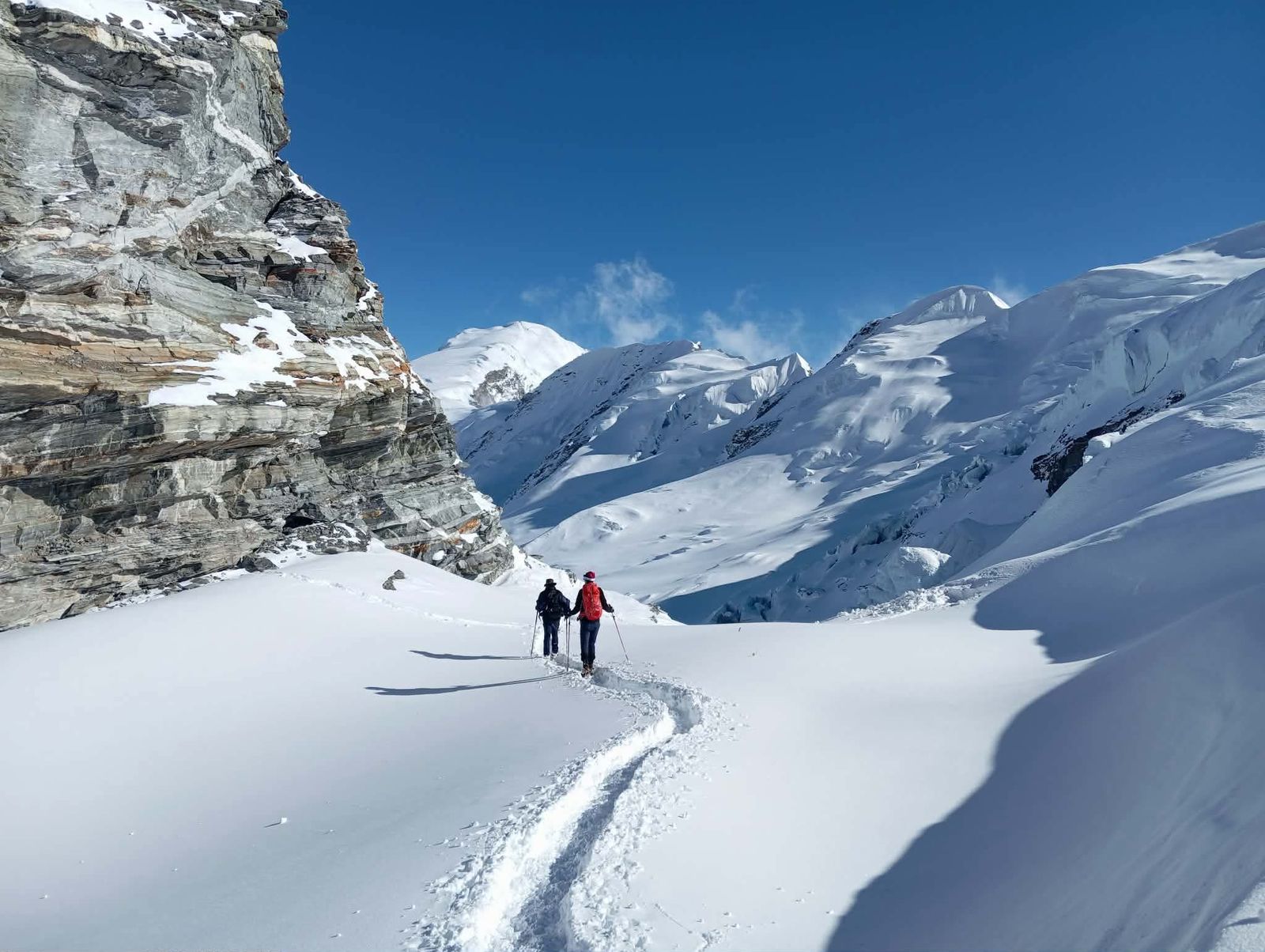
This place is a trekker’s dream. Imagine walking through forests of rhododendron, Nepal’s national flower. In spring, these trees explode with red and pink flowers. It’s like walking through a painting. You’ll cross streams gushing with icy water. You’ll climb stone steps carved into the hillsides by people long ago. You’ll pass through villages where life is simple and people smile at you even though they have very little.
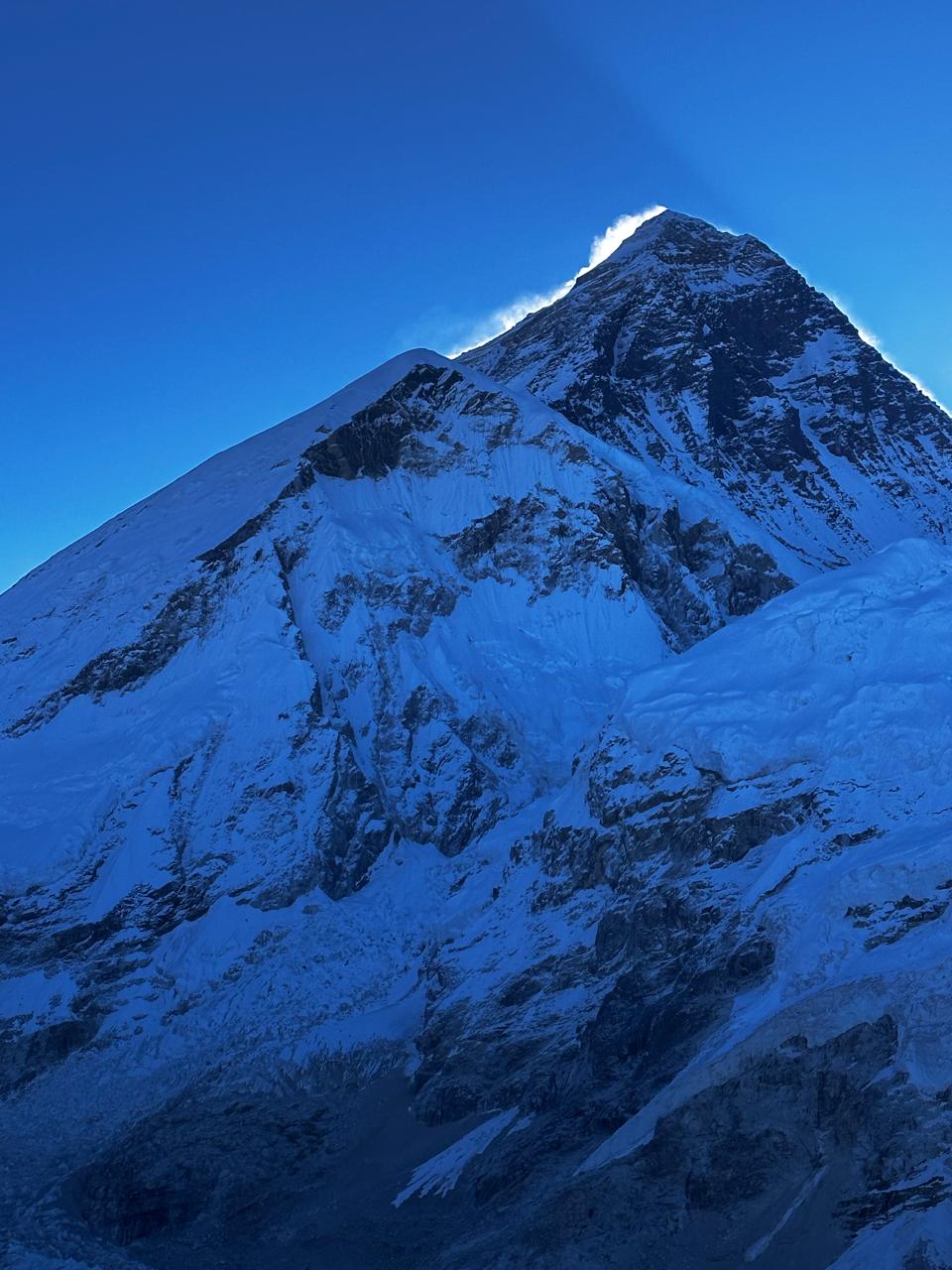
Every step you take brings you higher. The air gets thinner. Your breath gets heavier. But the views get better. You see snow-capped peaks appearing on the horizon. You see yaks grazing on tough grass. You hear the wind whistling through the prayer flags.
And then, after days of walking, you finally reach the top. You see the lake.
It’s so blue. Not the blue of a swimming pool. It’s a deep, rich, almost unreal blue. Surrounded by brown and grey mountains, with patches of snow, the lake sits there like a precious jewel. The water is so cold it will numb your fingers instantly. But you don’t care. You just sit there and stare.
That feeling, my friend, is worth every step of the journey. It’s peace. It’s accomplishment. It’s awe. It’s realizing how small you are, but also how amazing it is to be alive.
So, you’re convinced. You want to go. Let’s talk about how to actually do it.
First, you have to get to Nepal. You’ll probably fly into Kathmandu, the capital city. Kathmandu is a crazy, busy, colorful place. Spend a day or two there. Visit the temples. Eat the food. Get ready for your adventure.
From Kathmandu, you need to get to a town called Dhunche. It’s about a 7-8 hour drive. The road is bumpy. It winds through mountains and along rivers. You’ll be tired when you get there. But that’s where your trek begins.
If you don’t have much time, you can do a shorter trek. You start in Dhunche and walk to a place called Chandanbari. Then you go to a beautiful lake called Bhairav Kunda. From there, you climb up to Lauribina Pass and then down to Gosaikunda. After visiting the lake, you can return the same way. This takes about 5 to 7 days.
If you have more time and you want to see more, take the longer route. This one goes through the famous Langtang Valley. The Langtang Valley is called the “Valley of Glaciers.” It’s stunning. You walk through dense forests, cross rivers on suspension bridges, and stay in small teahouses run by friendly local families.
You go from Dhunche to Syabrubesi, then to Lama Hotel, then to Langtang village, then to Kyanjin Gompa. From there, you cross a high pass called Lauribina La to reach Gosaikunda. This route takes about 10 to 14 days. It’s harder, but the views are even more incredible.
You might be wondering, “Where do I sleep?” Don’t worry, you don’t need to carry a tent. Along the trekking routes in Nepal, there are small lodges called teahouses. They are simple. You get a small room with a bed and a blanket. Sometimes the walls are just plywood. The toilet might be outside. But they are warm, safe, and the food is good.
You’ll eat dal bhat (rice and lentil soup) mostly. It’s the perfect food for trekkers. It gives you energy and keeps you warm. You’ll also find noodles, soup, and tea. Lots and lots of tea. Ginger tea, milk tea, black tea. It’s the best thing after a long day of walking.
The mountains have seasons, and you need to pick the right one.
The Best Time: Autumn (September to November)
This is the perfect time. After the summer rains, the air is clear and clean. The skies are blue. You can see the mountains so clearly they look like you can touch them. The weather is not too hot and not too cold. During the day, you might even walk in just a t-shirt. At night, it gets cold, but that’s okay. This is when most people go.
The Second Best Time: Spring (March to May)
Spring is also wonderful. The weather is getting warmer. The best part is the flowers. The rhododendons bloom, and the hillsides turn red and pink. It’s beautiful. Sometimes in spring, there can be hazy skies, but it’s still a great time to trek.
The Time to Avoid: Winter (December to February)
Winter is cold. Really cold. At Gosaikunda, the temperature drops way below freezing. The lake might even freeze over. Snow blocks the trails. It’s dangerous for normal trekkers. Only go in winter if you are very experienced and have proper gear. And even then, be careful.
The Time to Really Avoid: Monsoon (June to August)
This is the rainy season. It rains almost every day. The trails become slippery mud. Leeches come out and suck your blood (yuck!). Landslides can block the paths. The views are cloudy. Plus, it’s the hottest time of year, so you sweat in the rain. Not fun. Don’t go in monsoon unless you really love a challenge.
What You Need to Take: Packing Smart
You don’t need to carry your whole house. But you need the right things. Let’s make a simple list.
This is the most serious part of the trek. Gosaikunda is very high. At 4,380 meters, the air has much less oxygen than what you’re used to. Your body needs time to adjust. If you go up too fast, you can get altitude sickness.
At first, you might just have a headache. You might feel tired, dizzy, or sick to your stomach. You might not want to eat. This is mild altitude sickness. It’s common. The cure is to rest, drink lots of water, and not go higher until you feel better.
If you ignore the mild symptoms and keep climbing, you can get very sick. This is serious. You might have a really bad headache that won’t go away. You might vomit. You might feel confused or unable to walk straight. You might have trouble breathing, even when you’re resting.
This is a medical emergency. There is only one cure. You must go down immediately. Go to a lower altitude as fast as you can. Do not wait. Do not hope it will get better. Going down saves lives.
You can’t just walk into the mountains. You need permission. It’s easy to get, but you must have it. There are two main permits.
Keep these permits safe. You will be checked at several points along the trail.
One of the best parts of trekking in Nepal is the people. The trails are full of wonderful humans.
First, there are the locals. The people who live in these mountains are mostly from the Tamang and Sherpa communities. They are some of the kindest people on earth. They run the teahouses. They cook your food. They smile at you even when they are working hard. Many of them are Buddhists, and you’ll see their monasteries and prayer wheels along the way.
Then, there are the other trekkers. You’ll meet people from all over the world. Germany, Australia, Japan, America, everywhere. You’ll share stories over dinner. You’ll cheer each other on. You might make friends for life.
And of course, there are the guides and porters. Many trekkers hire them. A guide knows the trails, the weather, and the culture. They keep you safe and teach you things. A porter carries your heavy bag. These are strong, amazing people who make a living helping others see their beautiful homeland. If you hire a porter, treat them with respect. Pay them fairly. Give them food and a place to sleep.
After days of walking, you finally reach Lauribina Pass. This is the last big climb before the lake. It’s steep and tiring. Your heart pounds in your chest. Every step is hard. You stop to catch your breath every few minutes.
Then, you make it over the pass. And there it is.
Gosaikunda.
It’s bigger than you imagined. The water is so clear and so blue. The mountains rise up on all sides, some with snow on their peaks. It’s quiet. So quiet you can hear the wind and the sound of prayer flags flapping. The air is cold and thin and clean.
You walk down to the shore. There’s a small temple there. Pilgrims are praying. Bells are ringing. You dip your hand in the water. It’s freezing, so cold it hurts, but you don’t pull away. You feel something. Peace, maybe. Or awe. Or just the simple joy of being alive in such a beautiful place.
You stand there for a long time, just looking. You think about the story of Shiva and the poison. You think about all the people who walked this same path for thousands of years. You think about how far you’ve come.
It’s a moment you will remember forever.
What goes up must come down. The return trek is faster, but in some ways, it’s harder on your body. Your knees take a beating on the downhill. But it’s also a time to look back at what you’ve done. You pass the same villages and teahouses, but now you’re a different person. Stronger. More peaceful.
When you finally get back to Dhunche and climb into a jeep for the bumpy ride back to Kathmandu, you’ll feel strange. The noise of the city will shock you. The crowds will feel overwhelming. You’ll miss the mountains. You’ll miss the quiet. You’ll miss the simple life of walking, eating, and sleeping.
This is normal. The mountains change you. They get inside you. And soon, you’ll start dreaming of going back.
Before you go, here are some small things to remember.
Gosaikunda is more than a destination. It’s a journey of the body, mind, and spirit. Whether you go for the legend of Shiva, the challenge of the trek, or just the beauty of the mountains, you will find something there that speaks to you.
You will find hardship. You will find cold and tiredness and doubt. But you will also find warmth, kindness, and breathtaking beauty. You will find peace.
So pack your bags. Lace up your boots. Take a deep breath. And go. The mountains are waiting. Lord Shiva’s sacred lake is waiting. And the adventure of a lifetime begins with a single step.
Happy trekking, friend. See you on the trail. Have a wonderful Journey.