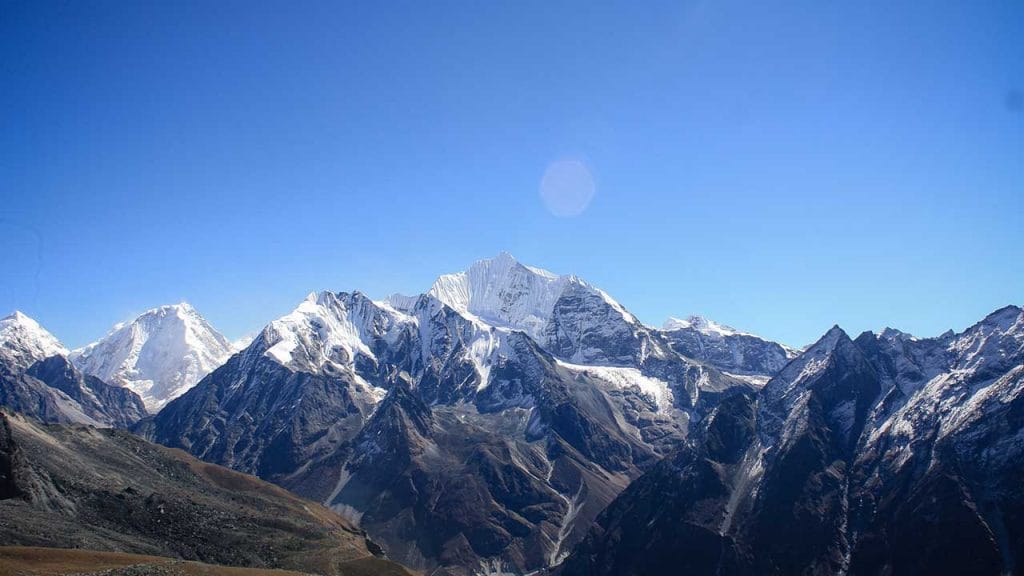


Pikey Peak Trek – 10 Days of Adventure
Pikey Peak
10 Days/ 9 Nights
Price From
View More
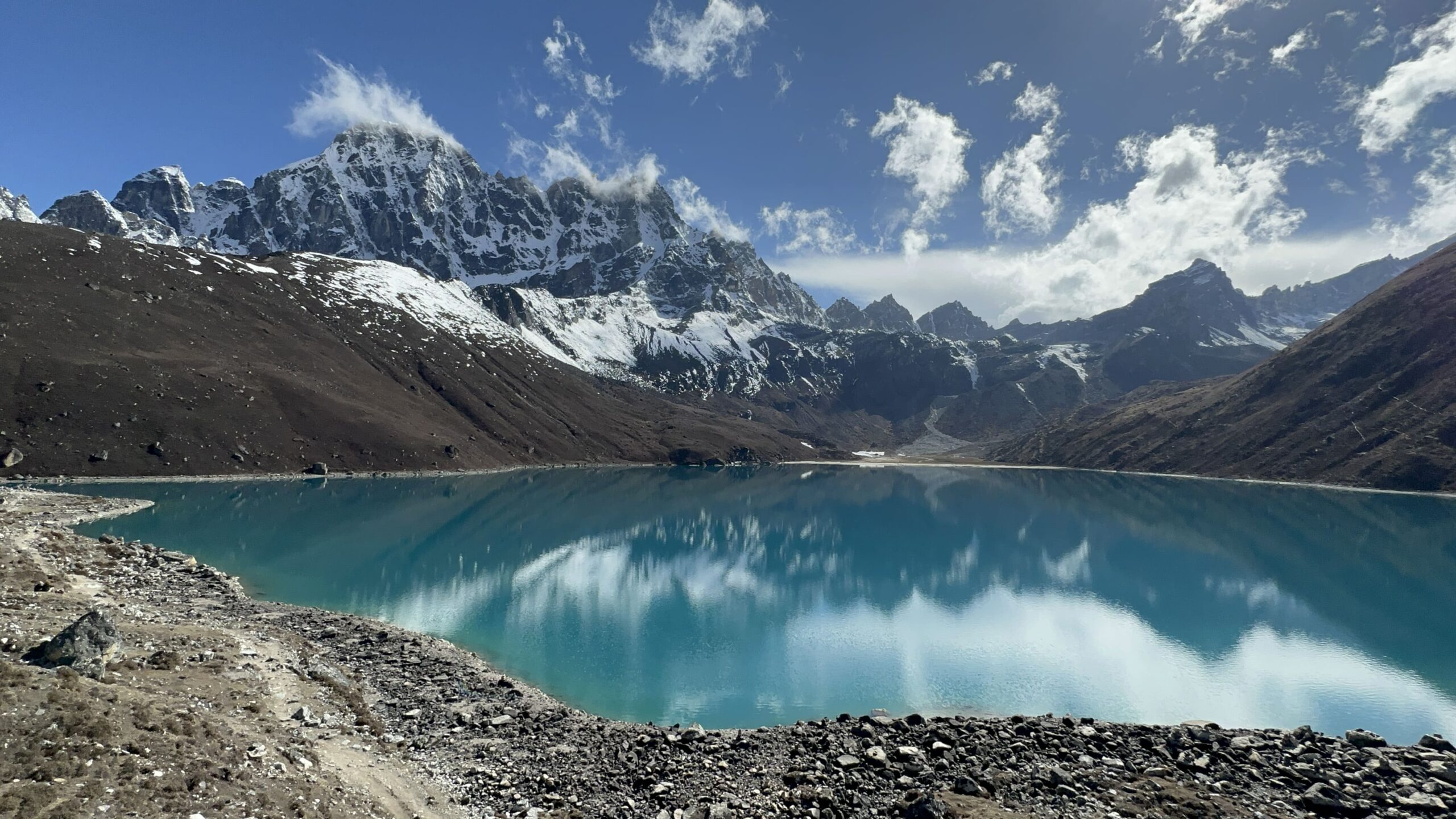
The Island Peak via Gokyo Lakes expedition is widely regarded as one of Nepal’s premier “trekking peak” adventures. But don’t let the term “trekking peak” fool you. While it serves as the perfect introduction to high-altitude mountaineering, it requires grit, technical focus, and a spirit of adventure.
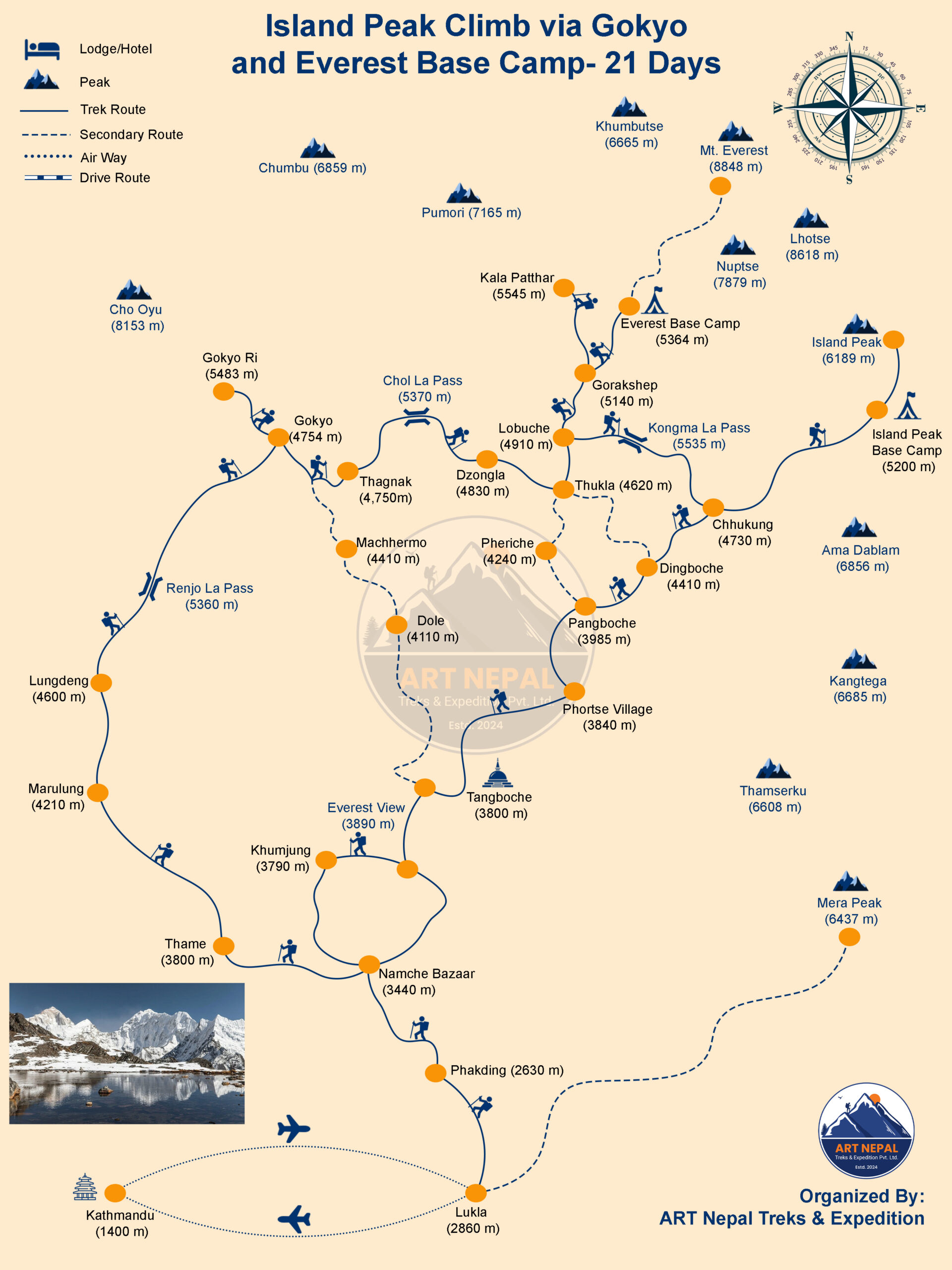
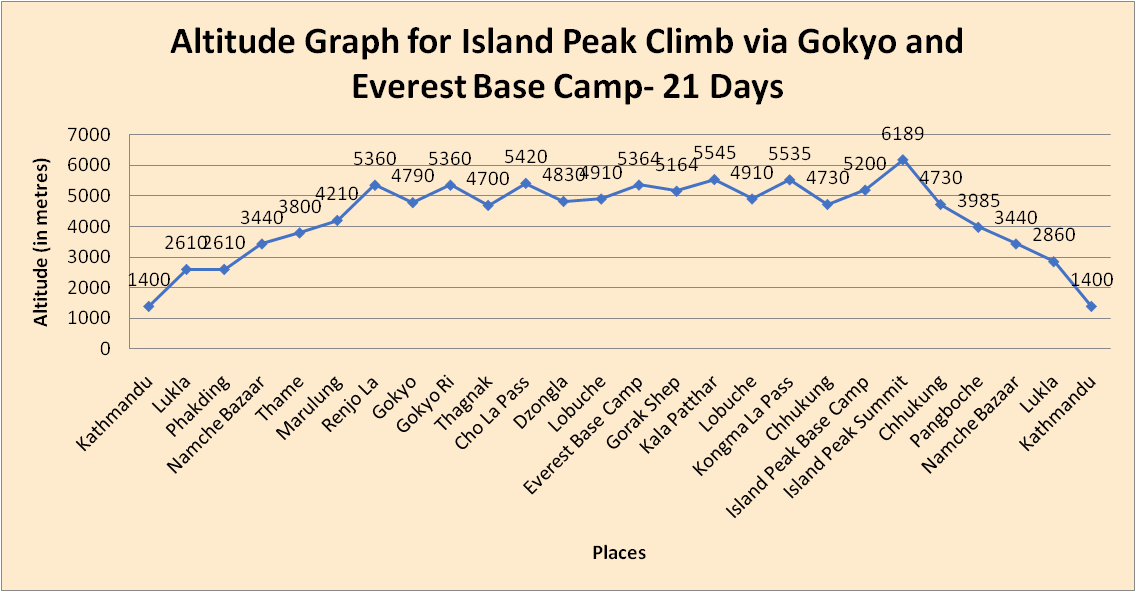
Most climbers head straight for the peak, but our 21-day circuit is built for success. By traversing the Gokyo Valley and crossing the Cho La Pass (5,420m) and Kongma La Pass (5,535m) first, your body undergoes the ultimate acclimatization. By the time you reach Island Peak Base Camp, you aren’t just a trekker; you are a mountain-hardened athlete ready for the summit.
This expedition is designed for:
Your expedition begins the moment you touch down at Tribhuvan International Airport. Kathmandu is a sensory explosion—the scent of incense, the chime of temple bells, and the vibrant colors of prayer flags. You are met by our expedition staff and transferred to a 3-star sanctuary in Thamel.
Before we fly to the mountains, we pay our respects to the culture. We visit Pashupatinath, the holiest Hindu shrine in Nepal, and Boudhanath, the massive Buddhist stupa.
The flight to Tenzing-Hillary Airport in Lukla is a legendary experience. As the Twin Otter aircraft weaves through emerald green hills, you catch your first glimpses of white-capped peaks. After landing on the dramatic uphill runway, we begin a gentle trek to Phakding.
Today we enter the Sagarmatha National Park. The trail winds through pine forests and crosses the iconic Hillary Suspension Bridge, draped in thousands of prayer flags. The final two-hour zig-zag climb to Namche is the first real test of your lungs.
We don’t stay idle. We hike to the Everest View Hotel. Here, Ama Dablam rises like a jagged tooth to the east, while the Lhotse-Everest massif dominates the northern horizon.
Moving off the standard EBC highway, we head west toward Thame. This valley is the ancestral home of many Everest record-holders.
We follow the Bhote Koshi river, an ancient salt-trading route between Nepal and Tibet. The vegetation thins, replaced by alpine scrub and yaks with thick, shaggy coats.
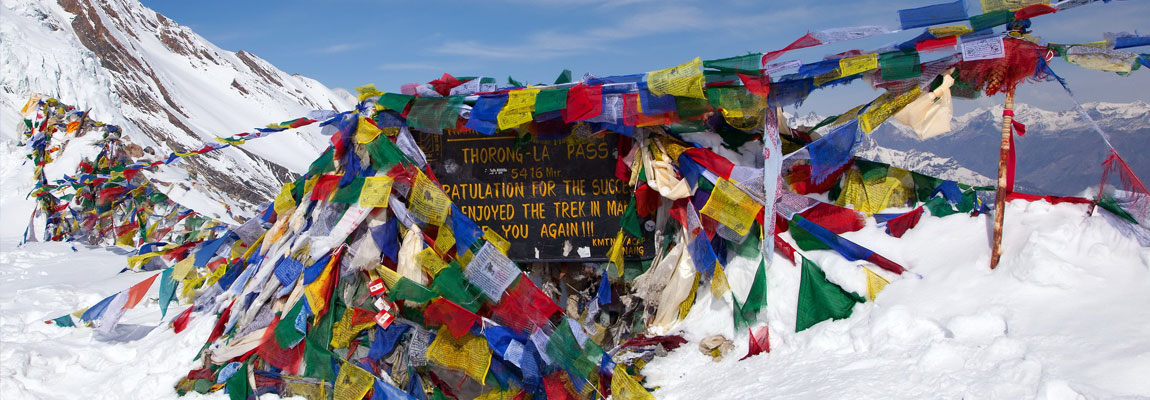
Our first of the Three High Passes. The climb to Renjo La is steep and steady. As you crest the pass, the view of the Gokyo Lakes below and Everest in the background is often cited as the most beautiful view in the world.
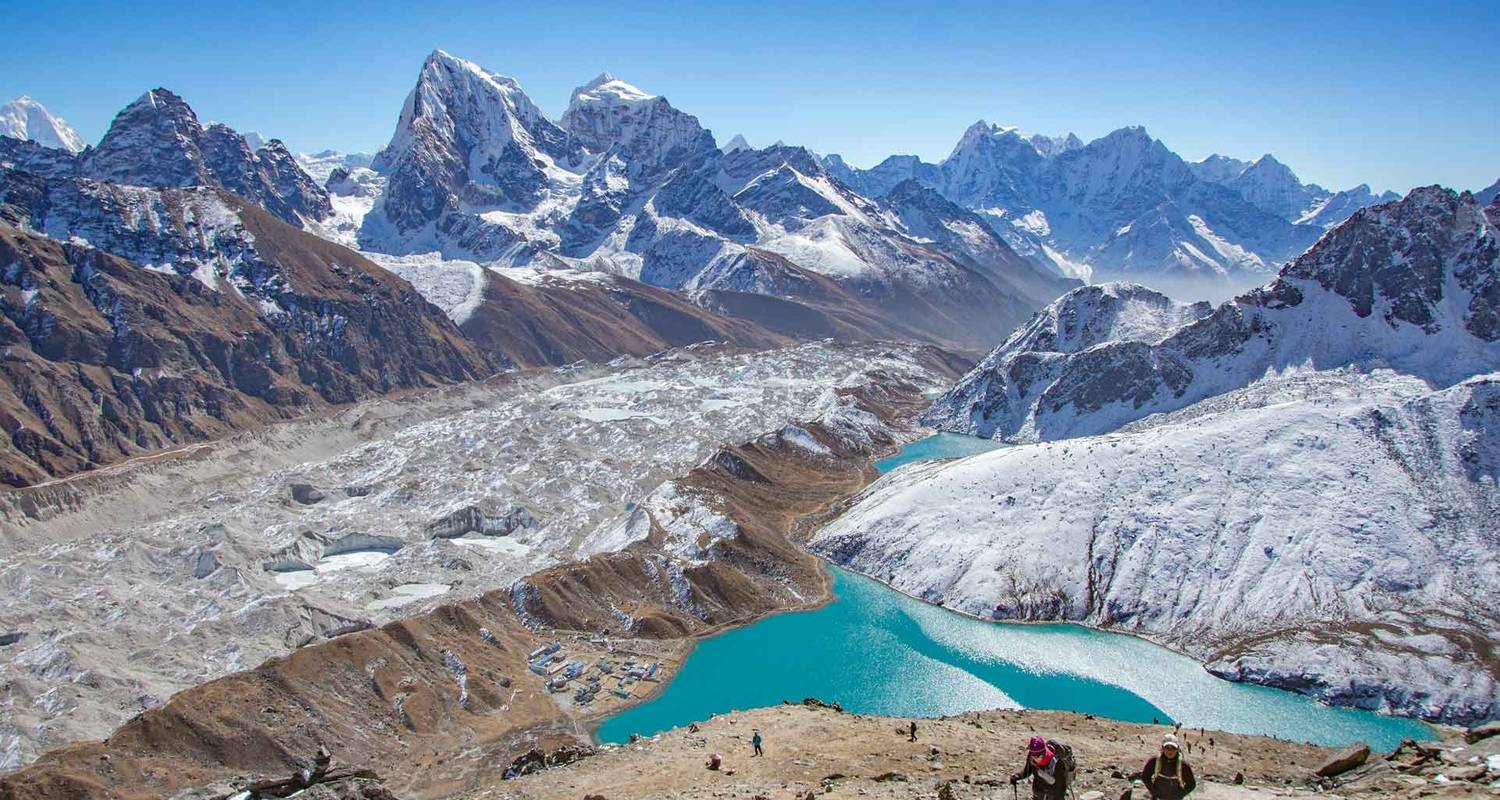
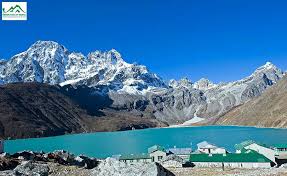
We climb Gokyo Ri (5,360m) for sunrise. The 360-degree panorama is unparalleled. Later, we trek toward the 5th and 6th lakes to see the massive “Scoundrel’s View” of the Everest North Face.
A short but tactical day crossing the debris-strewn glacier. We position ourselves at the base of the next great hurdle: the Cho La Pass.
The Cho La Pass is a true alpine crossing. It often involves scrambling over boulders and walking across a flat, non-technical glacier at the top.
We rejoin the main Everest trail. The path skirts the base of the peaks, overlooking the Khumbu Glacier.
The culmination of the trekking portion. We walk through the rocky moraine to Everest Base Camp. You are standing at the foot of the Khumbu Icefall.
A pre-dawn hike to the highest point of the trek. Kala Patthar offers the “National Geographic” view of Everest. We then descend back to Lobuche for a night of rest.
The hardest and highest of the three passes. Kongma La is rugged and remote. Reaching the top feels like entering a private sanctuary of the peaks. We descend into the Chhukung Valley, our staging ground for the climb.
We move into our tented camp. This afternoon is the “Skills Lab.” You will practice:
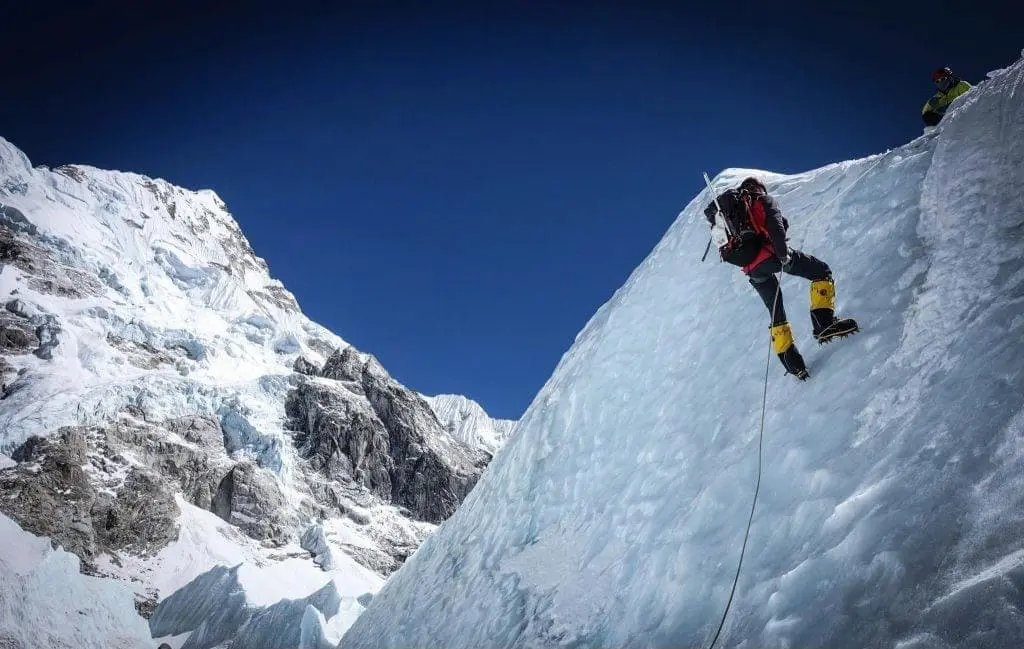
1:00 AM: Wake up for “Alpine Breakfast.” 2:00 AM: Start the climb. We scramble through the “High Camp” rock gully. 5:00 AM: Reach Crampon Point. We put on our harnesses and rope up for the glacier. 7:00 AM: The Headwall. You face a 100m vertical challenge. Focus on your breathing—kick, kick, slide the jumar. 8:30 AM: The Summit. A narrow ridge leads to the top. The world drops away. You are surrounded by the Lhotse face, Makalu, and Baruntse. 12:00 PM: Back at Base Camp for hot soup, then descend to Chhukung.
A celebratory descent. The air feels thick and rich with oxygen as we drop below 4,000m.
Retracing our steps through Tengboche. We often stop for a “victory brownie” at the Namche bakeries.
The final walk. We celebrate with our porters and Sherpa team—the unsung heroes of the expedition.
A final flight over the mountains. Back in Kathmandu, a hot shower and a farewell dinner await.
Domestic flights: Kathmandu ↔ Lukla
Airport transfers in Kathmandu
3-star hotel in Kathmandu (twin sharing)
Tea House accommodation during trek
Tented camps at Island Peak Base Camp
All meals during trek and climb (Breakfast, Lunch, Dinner)
Professional trekking & climbing guides
Porter support (for personal gear)
Climbing equipment: ropes, ladders, fixed lines
Permits: Sagarmatha National Park, Khumbu Pasang Lhamu Rural Municipality, Island Peak climbing permit, Garbage deposit
Pre-climb training and safety briefings
Oxygen & pulse oximeter for emergencies
First aid kit and emergency support
International airfare to/from Nepal
Personal trekking/climbing gear (boots, down jacket, crampons, harness, helmet, ice axe, etc.)
Travel and rescue insurance (mandatory)
Tips for guides and porters
Snacks, drinks, and personal expenses
Visa fees for Nepal
Optional sightseeing or cultural activities outside itinerary
The Island Peak via Gokyo Lakes expedition is graded as Strenuous / Climbing Expedition.
Success on Island Peak is highly dependent on the “weather window.”
We handle the complex bureaucracy of Himalayan climbing for you:
Safety is our “North Star.” Our 21-day itinerary is purposefully long. By visiting Gokyo and crossing the Three Passes before the summit, your red blood cell count increases naturally, drastically reducing the risk of Acute Mountain Sickness (AMS). Our guides carry pulse oximeters and supplemental oxygen for emergencies.
The Island Peak Summit Nepal experience involves three distinct phases:
We don’t just lead treks; we manage professional Everest Base Camp and Island Peak Expeditions. Our lead guides are IFMGA-certified or have multiple Everest summits. We provide a 1:2 Guide-to-Climber ratio on summit day to ensure your safety and maximize your chance of standing on the peak.
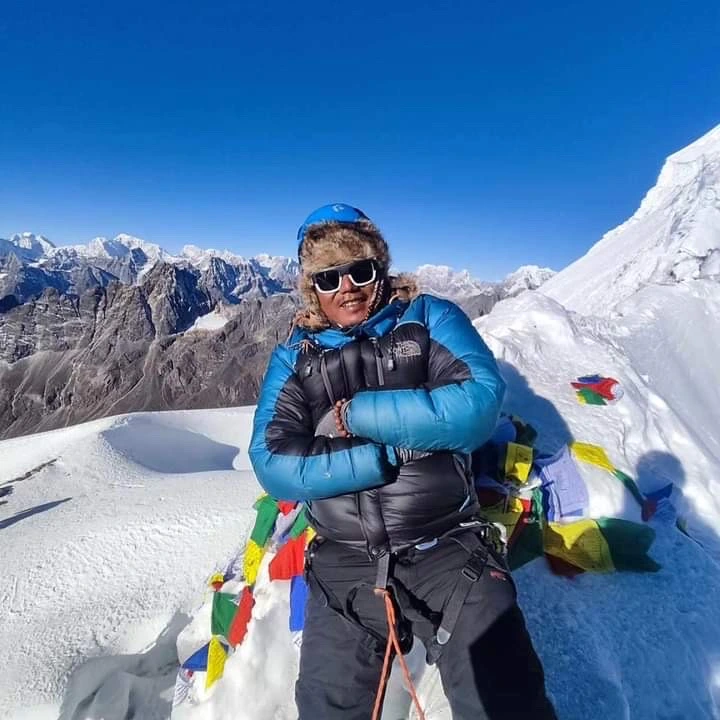
Are you ready to stand at 6,189 meters and look the world in the eye?
Moisture-wicking T-shirts (short & long sleeve)
Trekking pants / convertible pants
Thermal base layers (top & bottom)
Warm socks (wool or synthetic)
Hiking boots (waterproof, broken-in)
Comfortable trekking shoes / camp shoes
Hat / cap for sun
Gloves (light & warm)
Sunglasses (UV protected)
Climbing harness
12-point crampons
Ice axe
Helmet
Jumar / ascender
Trekking poles
Headlamp with spare batteries
Backpack (30–40 L for day, 60–70 L for main pack)
Water bottles / hydration system
Insulated down jacket (-20°C rated)
Fleece jacket or pullover
Softshell jacket & pants
Waterproof shell jacket & pants
Balaclava / neck gaiter / scarf
Warm hat / beanie
Extra underwear
Toothbrush, toothpaste, soap
Quick-dry towel
Sunscreen (SPF 50+) & lip balm
Personal medications / first aid items
Hand sanitizer / wet wipes
Personal toiletries
Camera / GoPro
Chargers and power bank
Adapter for Nepal (Type C, D, or M)
Optional GPS or satellite phone