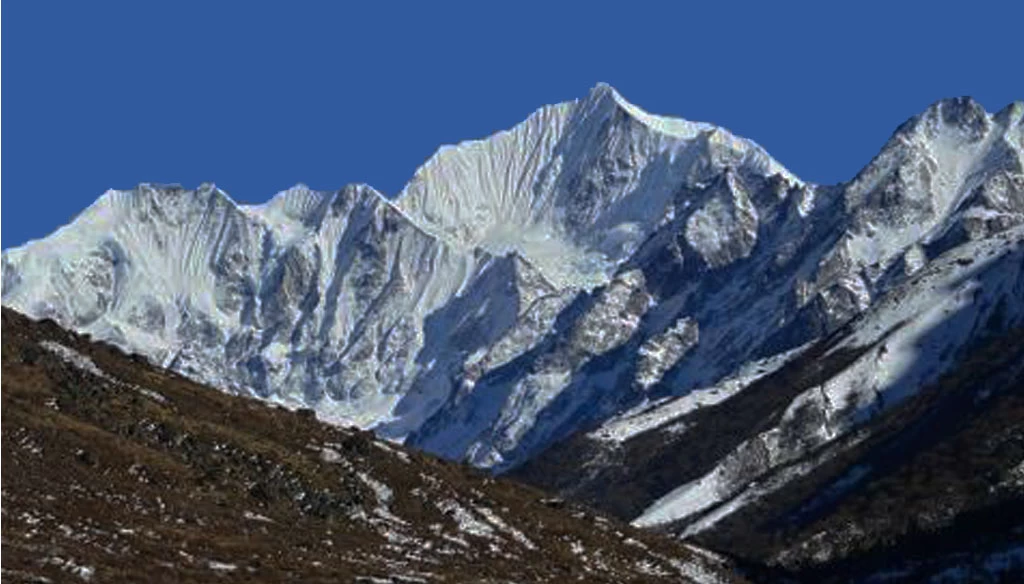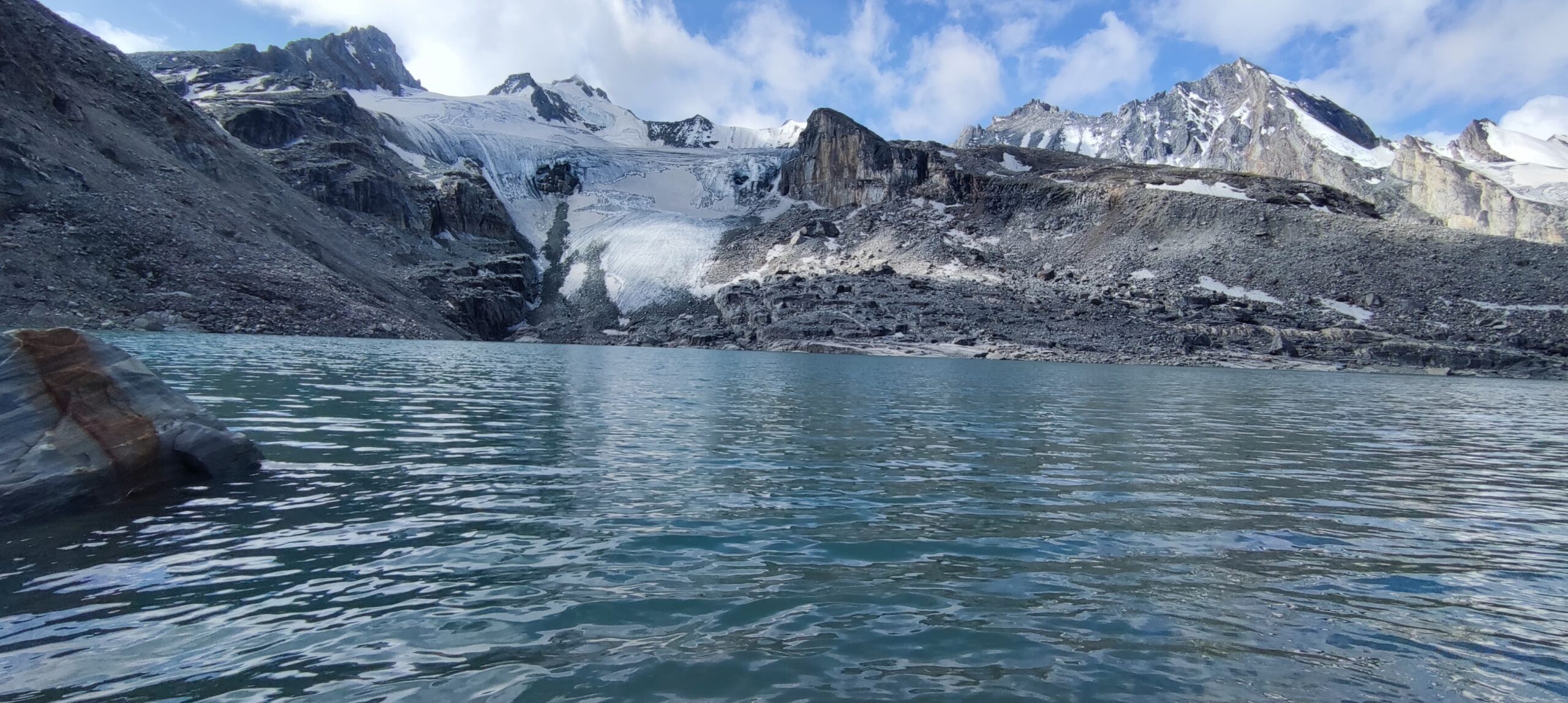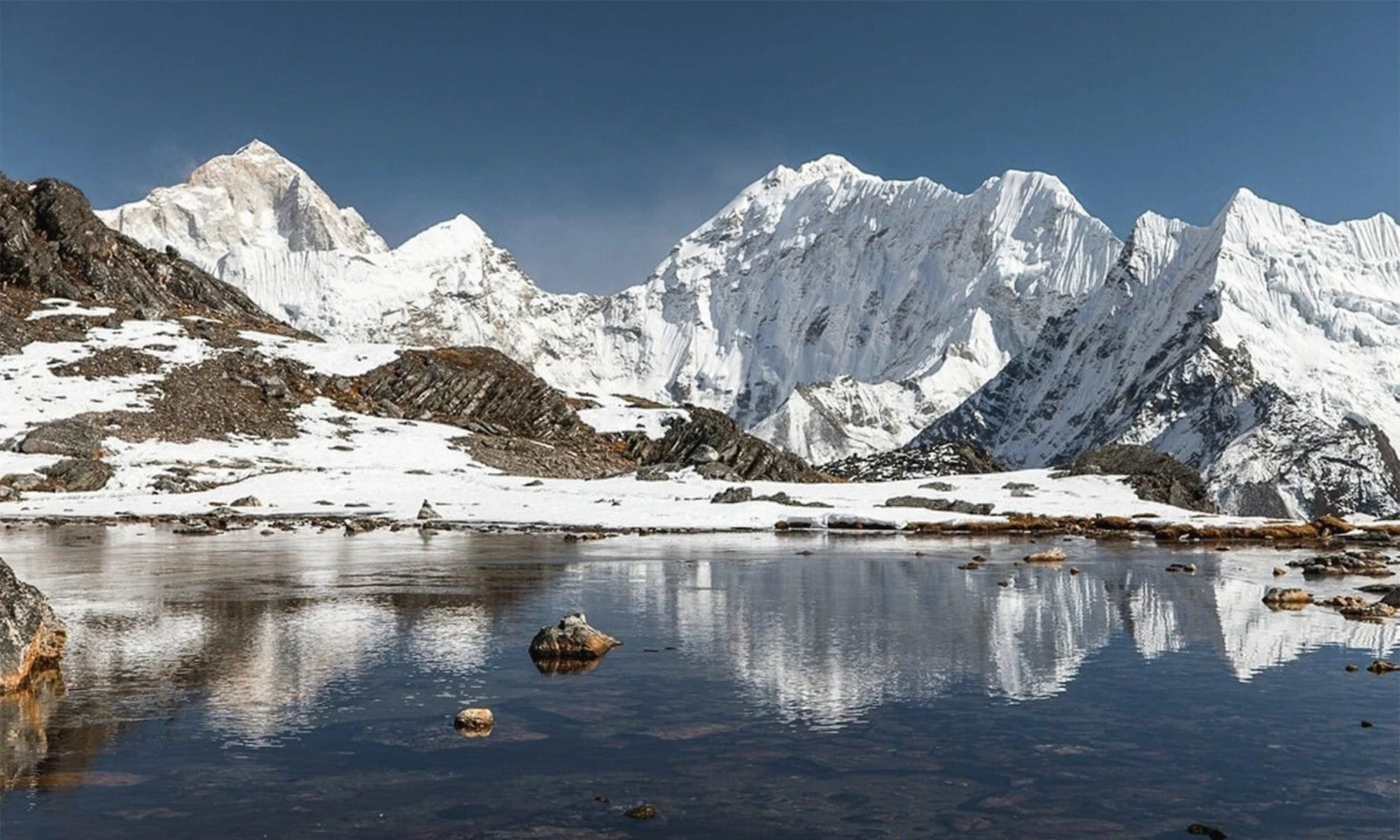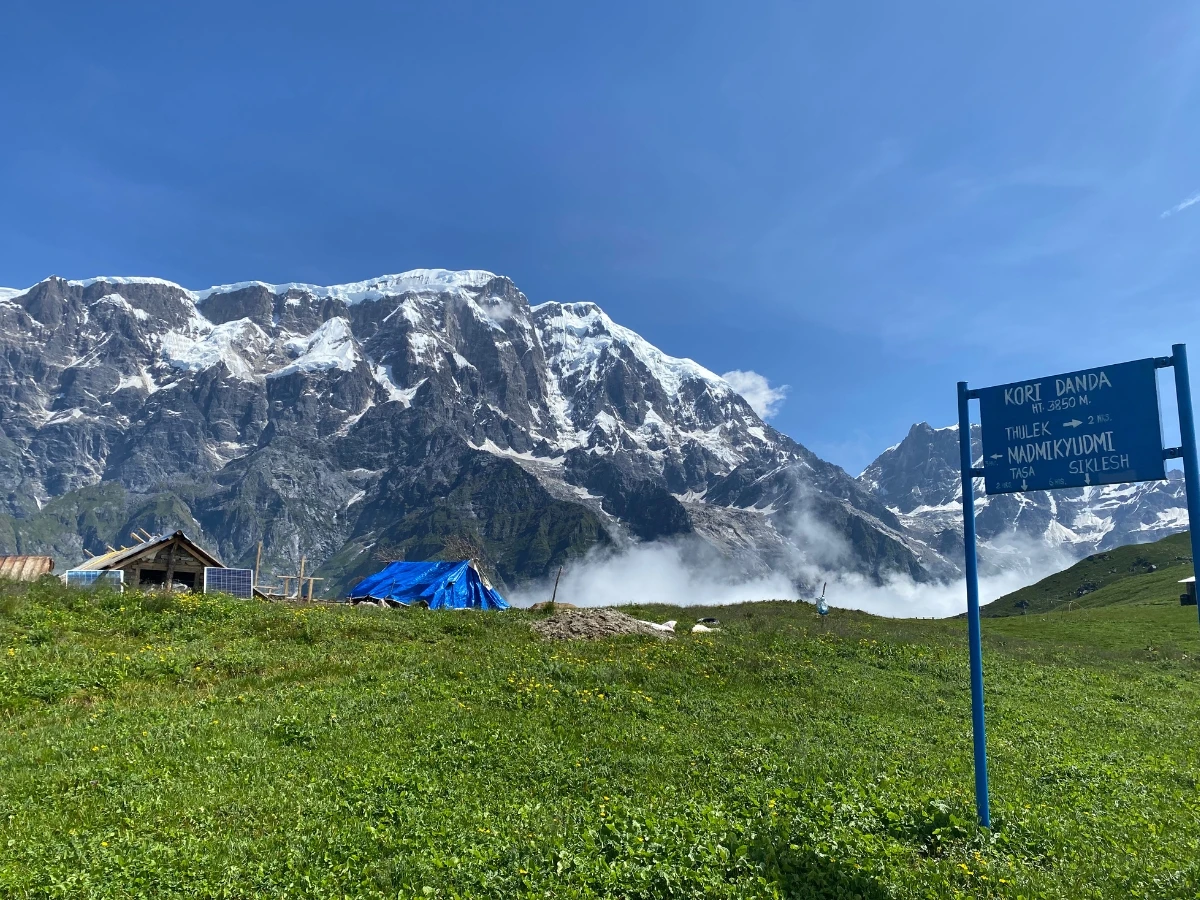
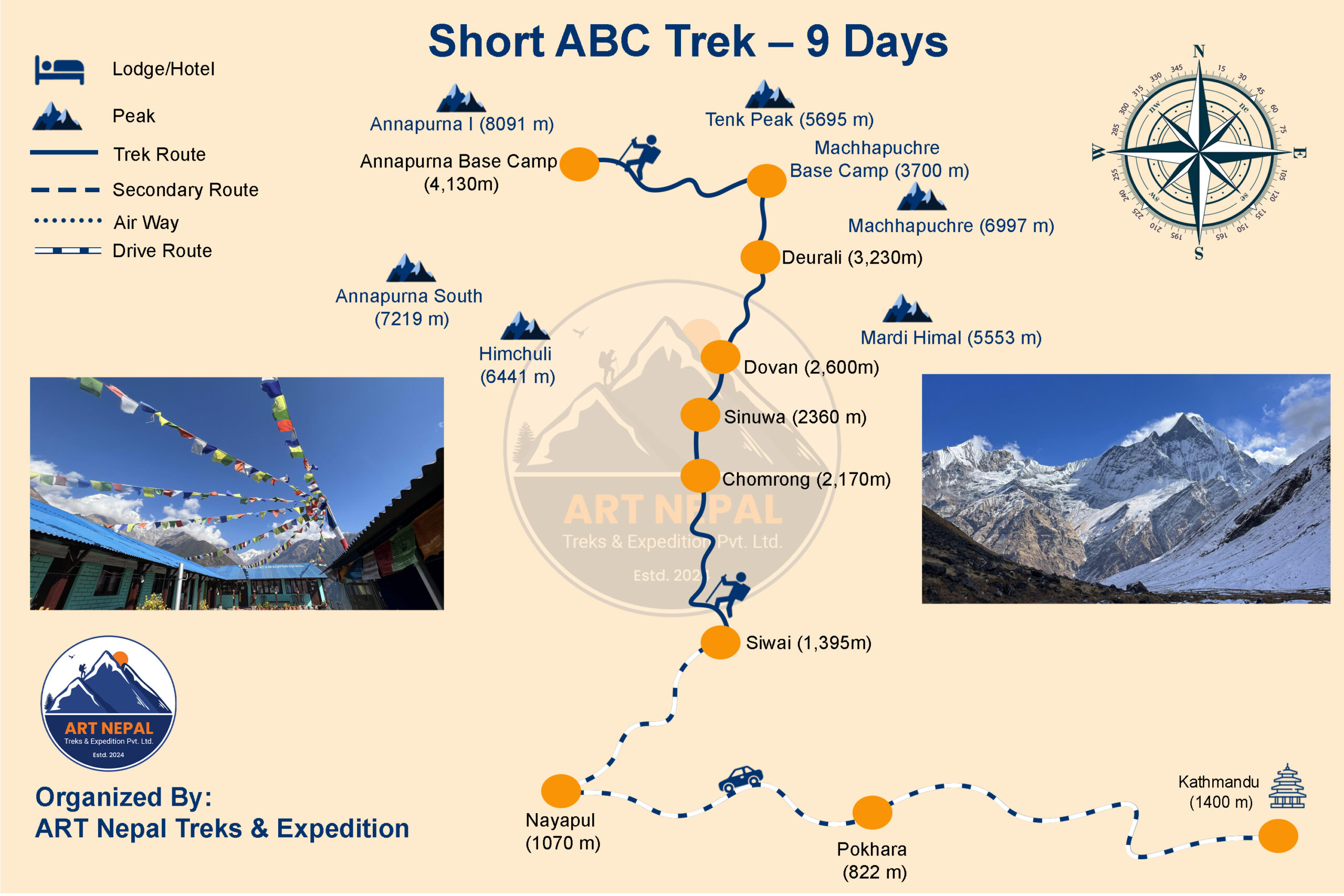
Short ABC Trek – 9 Days

Annapurna Base Camp (ABC)
9 Days/8 Nights
slide image
slide image
slide image
slide image

Introduction

The Short ABC Trek is designed for travelers seeking a condensed yet immersive Himalayan experience. This trek provides a perfect balance between adventure, natural beauty, and cultural exploration. Unlike the traditional 14-day ABC trek, this 9-day version allows you to experience the most iconic views of the Annapurna region in a shorter time without compromising on the highlights.

Your journey begins in Kathmandu, where you will meet your guide and receive a briefing on the trek, permits, and necessary equipment. A scenic domestic flight to Pokhara offers an aerial view of the Himalayas and lakes below. From Pokhara, a private transfer to Siwai or Nayapul marks the starting point of your trek.

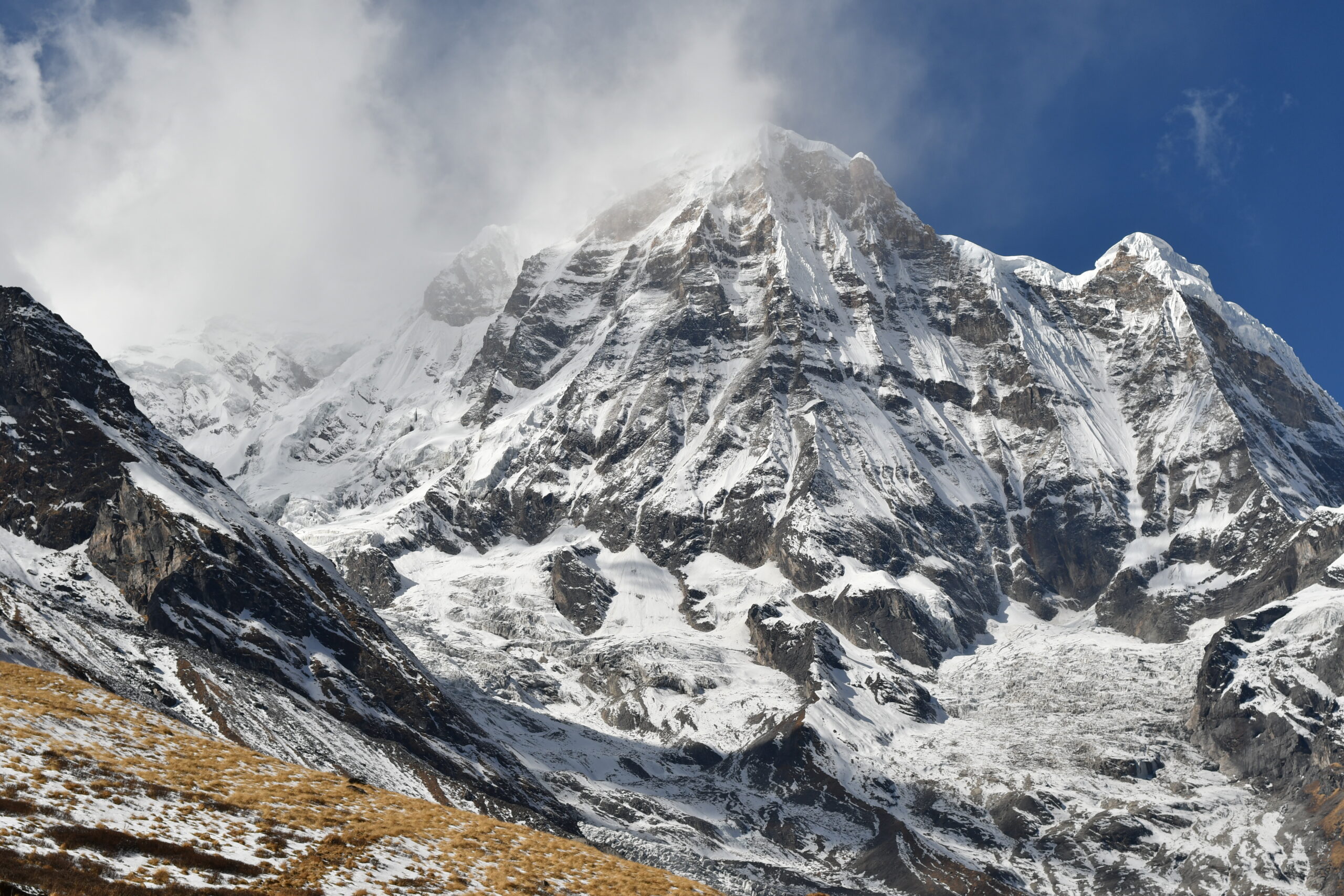
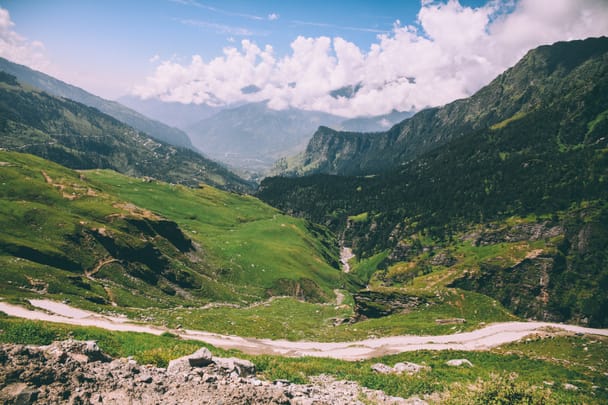
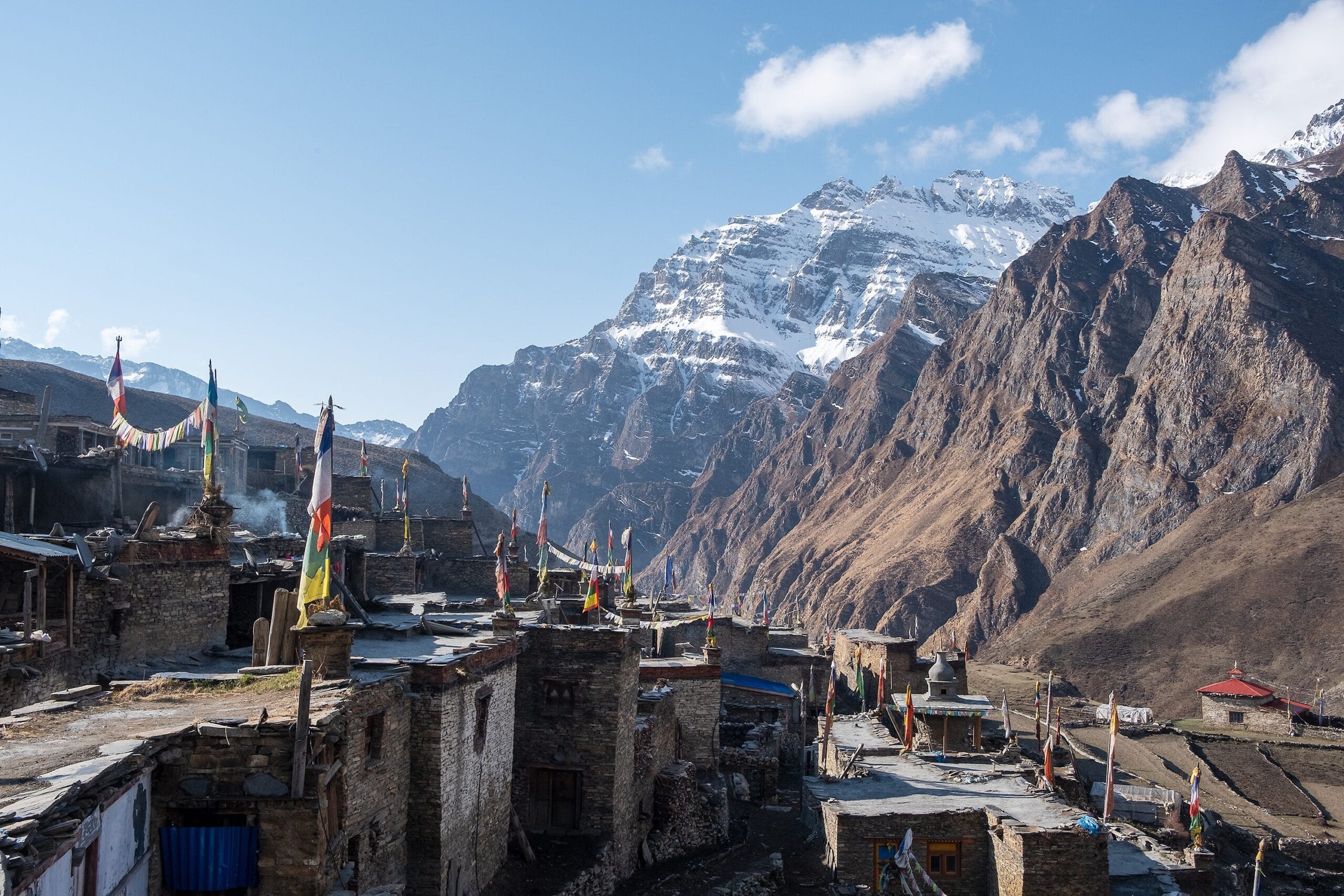
The trail passes through rhododendron forests, bamboo groves, rivers, and terraces while providing spectacular glimpses of towering peaks. Key villages along the route, such as Ghandruk and Chomrong, allow trekkers to experience the local Gurung and Magar cultures firsthand. The ultimate reward is the Annapurna Base Camp (4130m), surrounded by some of the world’s most impressive peaks.

The trek combines challenging trails, steep ascents, and exposed alpine paths with rest stops in comfortable teahouses. Its moderate-to-strenuous grade ensures that travelers gain a sense of accomplishment while experiencing Nepal’s rich landscapes and culture. ART Nepal Treks & Expedition ensures every detail is planned, from transportation to accommodation, so trekkers can focus entirely on the adventure.

What Can You Expect from the Trek?

The Short ABC Trek provides a combination of natural beauty, cultural immersion, and physical challenge. Here’s what you can look forward to:

Breathtaking Mountain Landscapes:

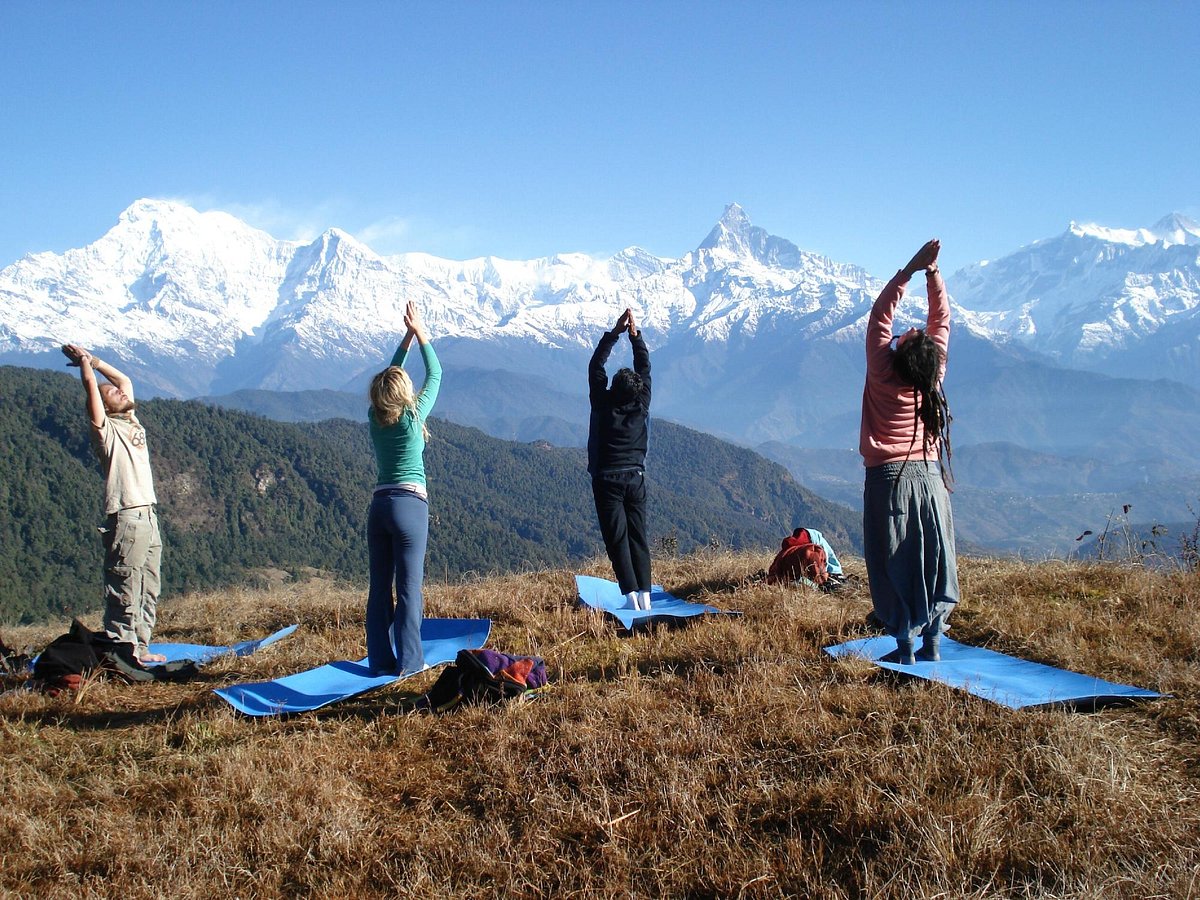
  • Annapurna South, Machhapuchhre, Hiunchuli, Gangapurna, and Himal Chuli offer spectacular vistas from multiple points along the trek.
  • Sunrise and sunset at ABC are unforgettable photo opportunities.

Cultural Experiences:

  • Visit traditional villages such as Ghandruk, Chomrong, Dovan, and Deurali.
  • Interact with Gurung and Magar families, observe daily routines, and enjoy local cuisine.

Challenging Trekking Sections:

  • Ascend steep trails to reach high-altitude points.
  • Navigate rocky paths, river crossings, and forest trails.

Relaxation and Comfort:

  • Enjoy natural hot springs at Jhinu Danda.
  • Stay in cozy teahouses with meals included.

List of Experiences:

  • Scenic flights over the Himalayas
  • Hiking through forests and farmland
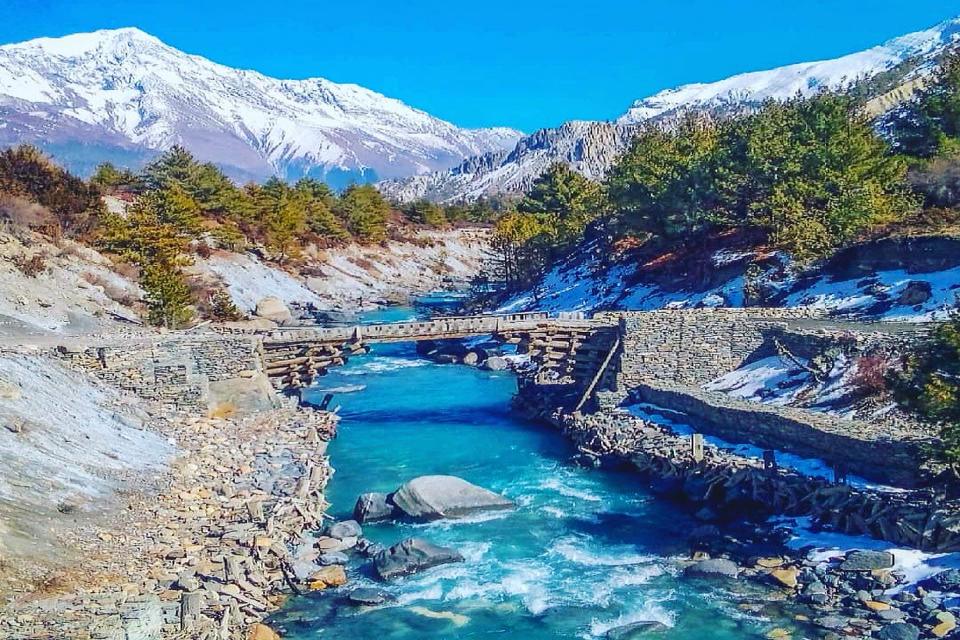
  • Suspension bridge crossings
  • Panoramic mountain views at sunrise and sunset
  • Hot spring baths and relaxation
  • Village visits and cultural interactions

Is the Short ABC Trek Suitable for You?

This trek is suitable for a wide range of hikers but requires preparation due to its high-altitude sections and long trekking hours.

Considerations:

  • Fitness Level: Moderate to good fitness is necessary; daily hikes last 4–7 hours.
  • Experience: Beginners can undertake this trek with guidance, but seasoned trekkers will find it manageable and rewarding.
  • Altitude Awareness: ABC is at 4,130 meters; some may experience mild altitude sickness.
  • Time Availability: The trek is designed for those with limited time but wanting the ABC experience.

List of Suitable Trekkers:

  • Fitness-conscious travelers
  • First-time trekkers with proper preparation
  • Experienced hikers seeking a short but rewarding trek
  • Culture and photography enthusiasts
  • Adventure travelers seeking mountain immersion

How to Get Prepared for Trek?

Proper preparation is essential for a safe and enjoyable Short ABC Trek. Preparation includes physical training, mental readiness, gear, and acclimatization strategies.

Physical Preparation:

  • Cardiovascular workouts (running, cycling, swimming)
  • Strength exercises for legs, core, and back
  • Practice hikes with backpacks to simulate trail conditions

Mental Preparation:

  • Maintain a positive mindset for challenging sections
  • Learn about altitude sickness and how to respond
  • Prepare mentally for variable weather and trail conditions

Gear, Clothing, and Equipment:

  • Sturdy hiking boots, waterproof jacket, trekking pants, thermal layers
  • Backpack, water bottles, trekking poles, sleeping bag, and headlamp
  • Personal hygiene items and first-aid kit

Acclimatization Tips:

  • Gradual ascent from lower altitudes (Pokhara → Siwai → Chomrong → ABC)
  • Stay hydrated and rest when needed
  • Listen to your body; descend if symptoms of altitude sickness occur

Other Preparations:

  • Obtain TIMS card and Annapurna Conservation Area Permit (ACAP)
  • Research route, trail conditions, and weather forecasts
  • Hire a guide or porter if preferred for assistance and cultural insight
  • Trip Duration

    9 Days/8 Nights

  • Group Size

    1–15 People

  • Maximum Altitude

    4,130 meters (Annapurna Base Camp)

  • Trip Difficulty

    Moderate to Strenuous

  • Activities

    Trekking, Peak Climbing, Scenic Flight

  • Best Season

    March–May, September–November

  • Trip Start & End

    Kathmandu-Kathmandu

  • Meals

    Breakfast, Lunch, Dinner

  • Accomodation

    3-Star Hotels, Teahouses, Lodges

Highlights

  • Scenic Flight to Pokhara: Start your adventure with a breathtaking flight from Kathmandu to Pokhara, offering panoramic views of the Himalayan range including Langtang, Manaslu, and the Annapurna peaks.
  • Serene Highland Hikes: Traverse quiet highland trails, breathe crisp mountain air, and enjoy peaceful forests, rivers, and terraced fields.
  • World-Class Hiking Route: Follow one of Nepal’s most famous trekking routes, which combines lush landscapes, waterfalls, and alpine vistas with the majestic Annapurna Massif as a backdrop.
  • Cultural Encounters in Villages: Experience authentic village life in communities like Ghandruk, Chomrong, Sinuwa, and Deurali. Learn about the Gurung and Magar cultures, traditional homes, and local customs.
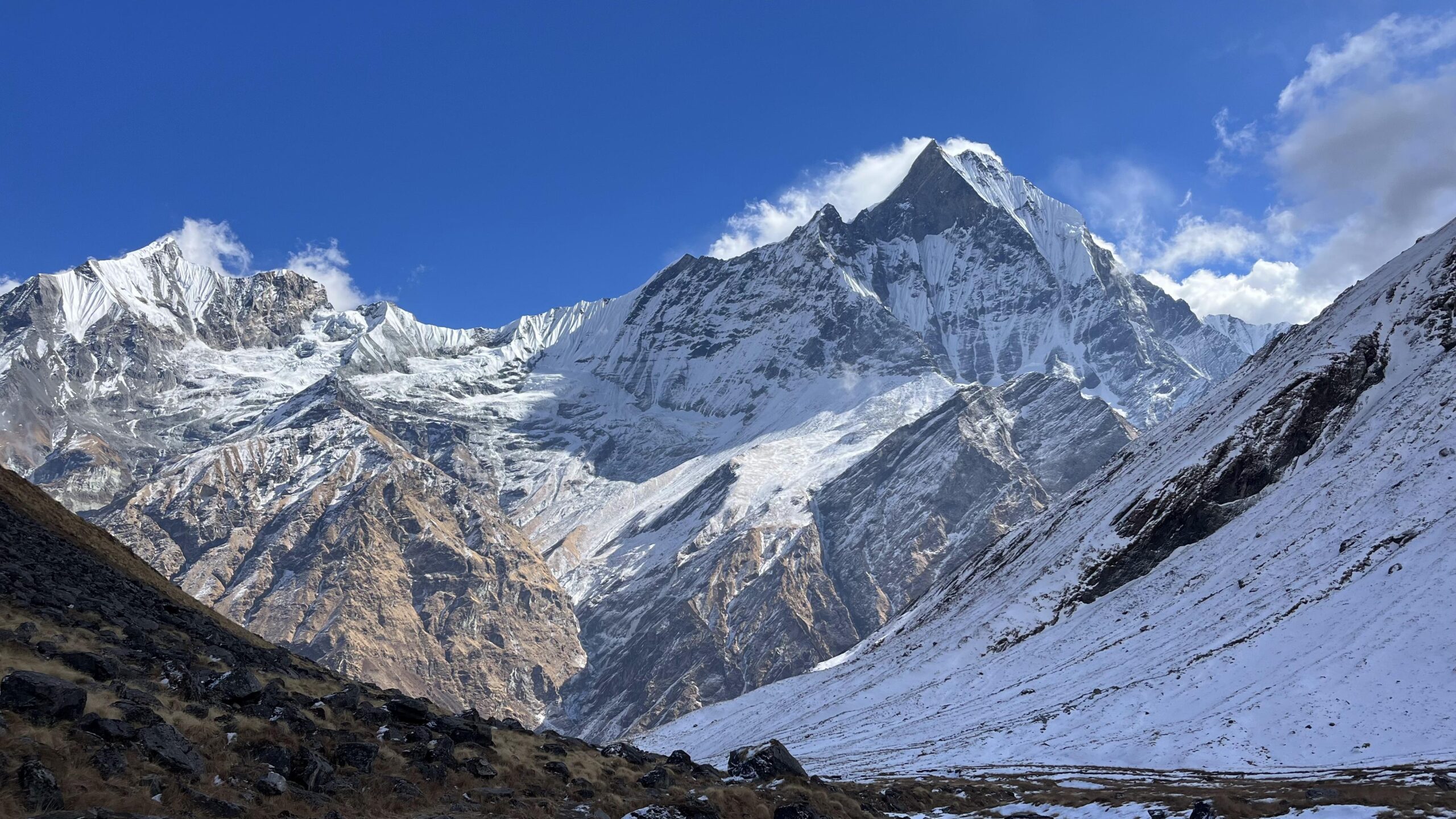
  • Sunrise and Sunset Spectacles: Witness unforgettable sunrises over Annapurna South and Machhapuchhre (Fishtail) and vivid sunsets reflecting over the Himalayan peaks.
  • Majestic Mountain Views: Observe breathtaking peaks such as Annapurna I (8091m), Annapurna II (7647m), Fishtail (6993m), Hiunchuli (6441m), Gangapurna (7455m), and Himal Chuli (6441m).
  • Quick Trek to Annapurna Base Camp: Reach ABC in just a few days, offering panoramic views of snow-capped mountains and glaciers without committing to a 14-day trek.
  • Natural Hot Springs: Relax in rejuvenating natural hot springs at Jhinu Danda after days of hiking.
  • Pokhara Exploration: Enjoy a day in Pokhara, explore Phewa Lake, and interact with locals before or after your trek.

Itinerary

Day 01

Upon your arrival at Tribhuwan International Airport, our representative will greet you and provide a private transfer to your hotel in Thamel, the heart of Kathmandu. After checking in, you can relax and recover from your flight or explore nearby streets, shops, and cafes. In the evening, you’ll meet your trek guide for a comprehensive briefing about the trek. This session will cover the itinerary, trekking route, safety protocols, necessary permits, and equipment checks. This day allows you to prepare mentally and physically for the adventure ahead.

Altitude:
1400 m
Meal:
Not Included
Accomodation :
3-Star Hotel, Kathmandu

Day 02

After an early breakfast, board a short domestic flight to Pokhara, offering aerial views of the Annapurna range, Dhaulagiri, and Machhapuchhre peaks. On arrival in Pokhara, a private vehicle will take you to Siwai or Nayapul, the starting point of your trek. After lunch in Siwai, you’ll begin your trek to Chomrong, a picturesque village nestled at 2170 meters.

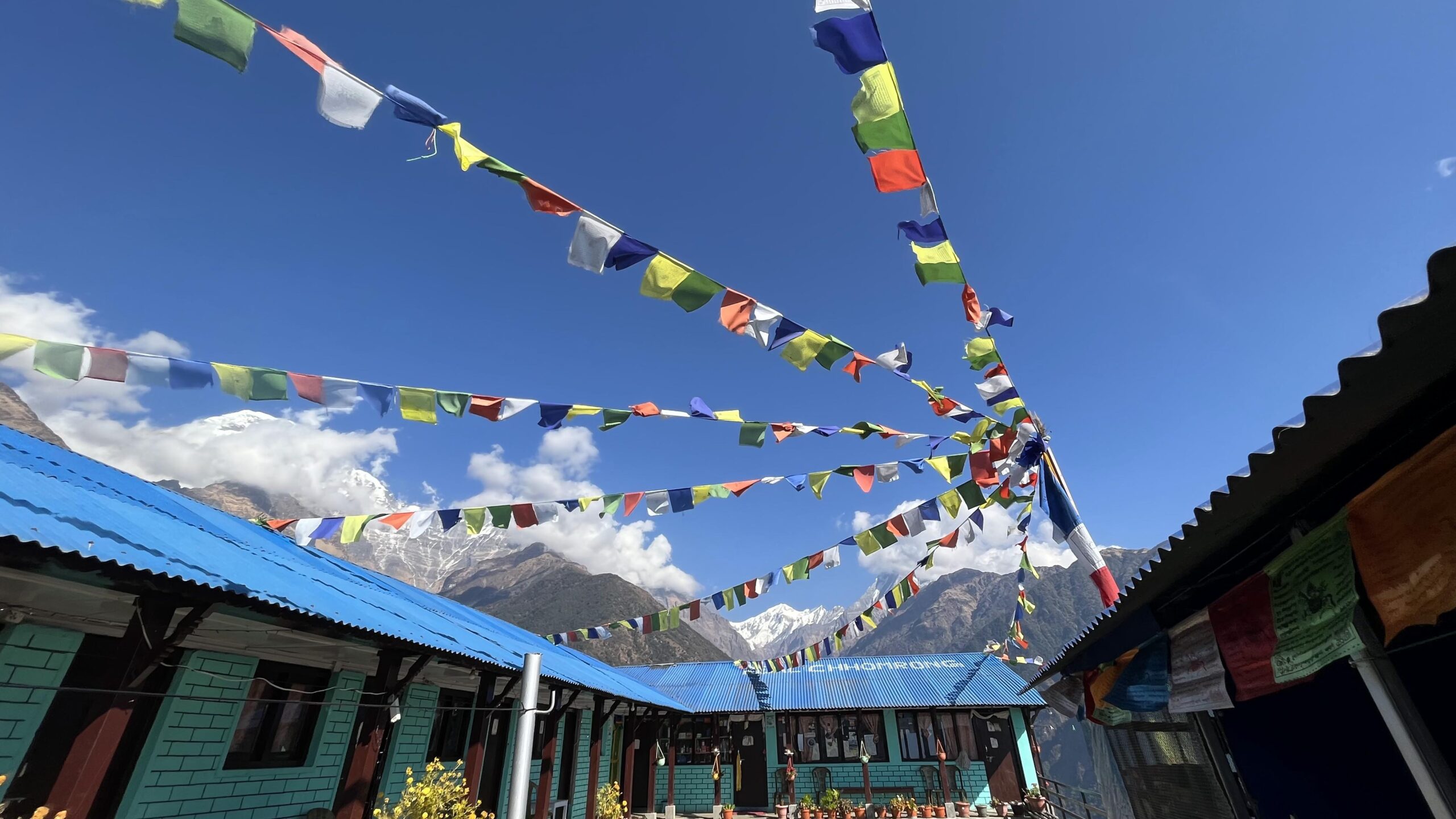
The trail passes through lush forests of rhododendron and bamboo, terraced farms, and small streams, giving a taste of the region’s natural beauty and local village life. You’ll cross stone steps and enjoy panoramic views of Machhapuchhre (Fishtail) and Annapurna South. Chomrong is a hub for trekkers, with tea houses offering basic comfort and hearty meals.

Trip Duration:
2–3 hours trek + flight/drive
Trip Distance:
5 km
Altitude:
2170 m
Meal:
Breakfast, Lunch, Dinner
Accomodation :
Tea House, Chomrong

Day 03

Begin the day with a hearty breakfast before trekking. Descend carefully through stone steps to Chomrong Khola and cross a suspension bridge, then begin a gradual ascent through dense bamboo and rhododendron forests. Pass small villages and streams, and enjoy the serene sounds of nature along the trail.

The trek continues upward, eventually reaching Dovan, a peaceful resting place nestled in the valley. This day is moderately challenging due to the combination of ascents and descents, but the reward is stunning views and immersion in the Annapurna region’s natural environment.

Trip Duration:
6–7 hours
Trip Distance:
8.6 km
Altitude:
2600 m
Meal:
Breakfast, Lunch, Dinner
Accomodation :
Tea House, Dovan

Day 04

This day’s trek is relatively peaceful and scenic, passing through dense forests of rhododendron, bamboo, and pine, as well as along small waterfalls and glacial streams. The trail is quieter, allowing you to focus on the natural surroundings. As you approach Deurali, the altitude increases, offering more spectacular views of the Annapurna and Machhapuchhre peaks.

Hinku Cave and nearby streams make for a good rest stop before the final ascent to Deurali. You’ll spend the night in a teahouse with opportunities to interact with local trekkers and guides.

Trip Duration:
5–6 hours
Trip Distance:
7.4 km
Altitude:
3230 m
Meal:
Breakfast, Lunch, Dinner
Accomodation :
Tea House, Deurali

Day 05

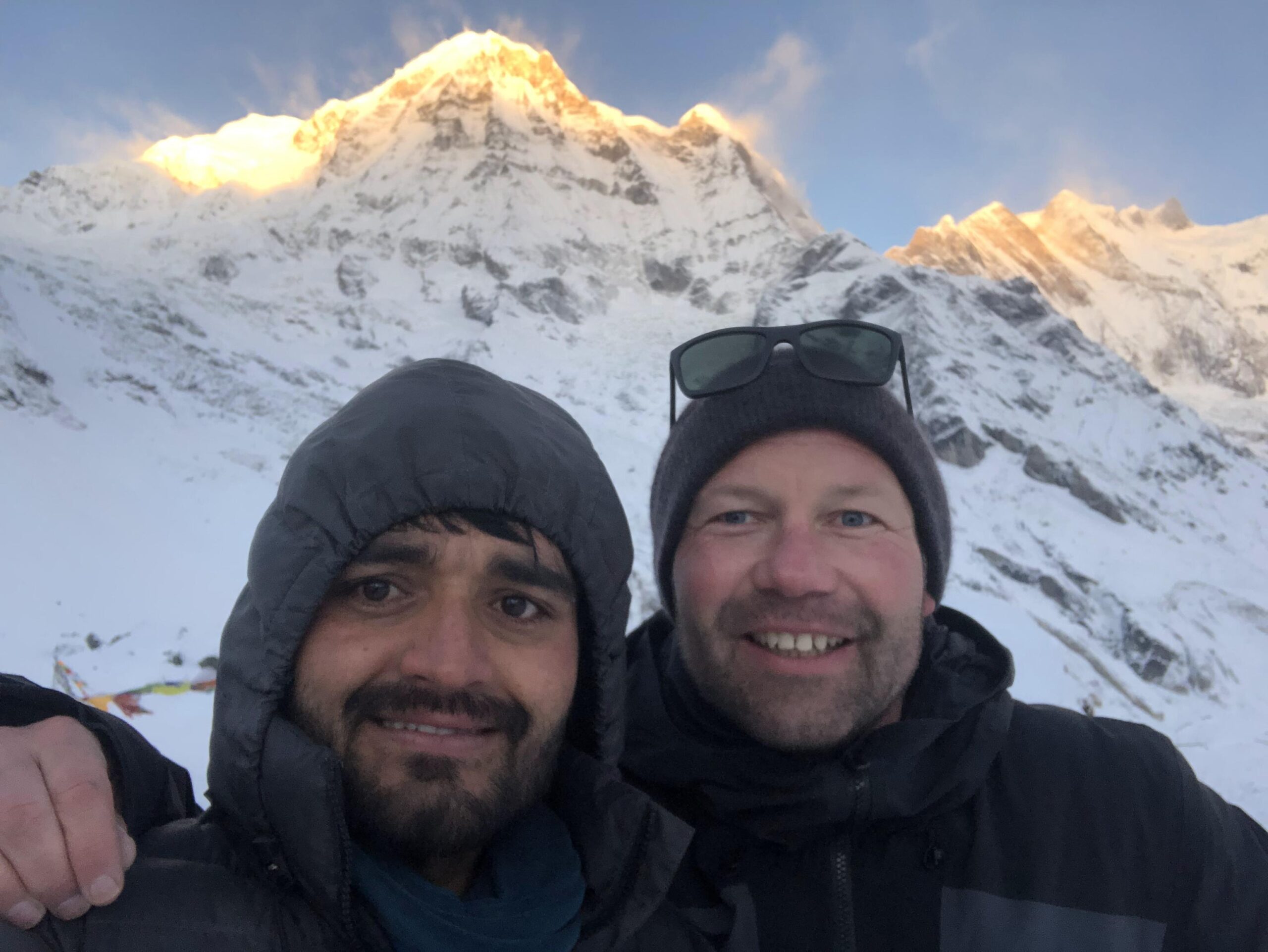
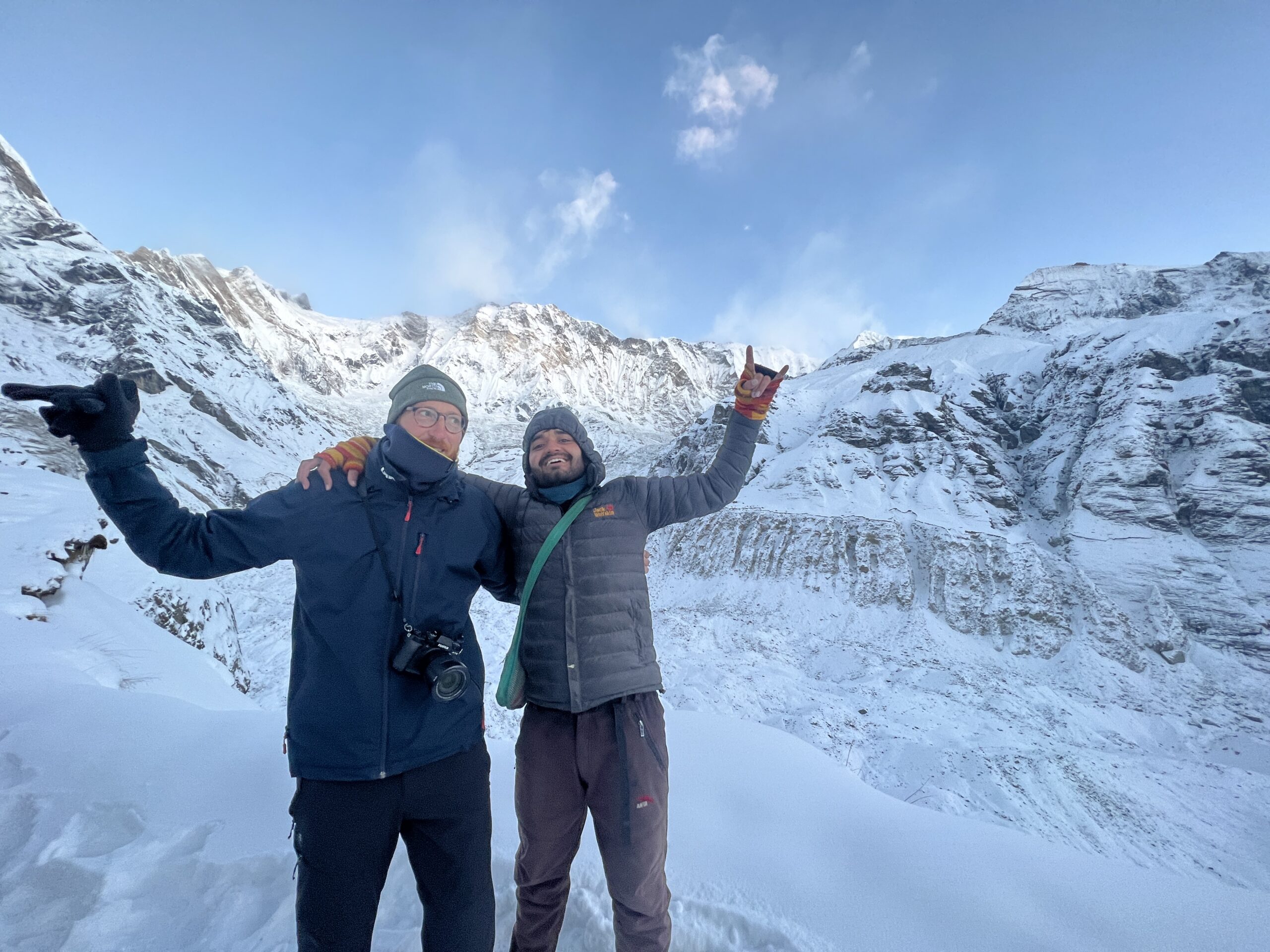
Today is the highlight of the trek. Start early to trek steeply through exposed alpine trails to Machhapuchhre Base Camp, where the views of the surrounding mountains are breathtaking. Continue along a more rugged trail to reach Annapurna Base Camp (ABC) at 4130 meters.

Here, you are surrounded by towering snow-covered peaks, glaciers, and moraine landscapes. Take time to rest, take photos, and absorb the panoramic views of Annapurna South, Hiunchuli, Gangapurna, and Fishtail. This is a physically demanding day but incredibly rewarding, with the chance to witness a true Himalayan high-altitude environment.

Trip Duration:
4–5 hours
Trip Distance:
6.8 km
Altitude:
4130 m
Meal:
Breakfast, Lunch, Dinner
Accomodation :
Tea House, Annapurna Base Camp

Day 06

After witnessing a stunning sunrise over the Annapurna peaks, begin the descent to Sinuwa, retracing the trail through Deurali, Bamboo, and Dovan. The descent is long and requires careful footing, but the views remain spectacular, and the pace is relaxed to accommodate your energy.

Along the way, enjoy interactions with villagers and the natural beauty of the Modi Khola valley, small waterfalls, and terraced farms. Reaching Sinuwa allows for a comfortable overnight stay in a teahouse, resting before the next day’s journey.

Trip Duration:
7–8 hours
Trip Distance:
19 km
Altitude:
2360 m
Meal:
Breakfast, Lunch, Dinner
Accomodation :
Tea House, Sinuwa

Day 07

Today’s trek is rewarding and relaxing. From Sinuwa, descend to Jhinu Danda, famous for its natural hot springs, where you can soak and rejuvenate tired muscles. Continue your trek to Siwai, completing the hiking portion of the journey.

From Siwai, a private vehicle takes you back to Pokhara, where you can enjoy an evening of relaxation, sightseeing, or boating at Phewa Lake. Pokhara’s serene environment is the perfect place to reflect on the trek and enjoy Nepalese hospitality.

Trip Duration:
4–5 hours trek + drive
Trip Distance:
10 km
Altitude:
822 m
Meal:
Breakfast, Lunch
Accomodation :
3-Star Hotel, Pokhara

Day 08

After breakfast, board a tourist bus or private vehicle for the return journey to Kathmandu, following the Marsyangdi and Trishuli Rivers. The drive takes about 7–8 hours and offers continuous scenic views of rural Nepal, hills, terraced farms, rivers, and occasional glimpses of snow-capped peaks.

Upon arrival in Kathmandu, check into your hotel and spend the evening relaxing or exploring the city. Optional visits to Pashupatinath Temple, Boudhanath Stupa, or Thamel market can be arranged if time permits.

Trip Duration:
7–8 hours drive
Trip Distance:
205 km
Altitude:
1400 m
Meal:
Breakfast
Accomodation :
3-Star Hotel, Kathmandu

Day 09

After breakfast, you will be transferred to Tribhuwan International Airport based on your flight schedule. If your flight allows, you may explore Kathmandu, shop for souvenirs, or arrange a short sightseeing tour. This marks the conclusion of your Short ABC Trek, leaving you with memories of breathtaking mountains, cultural experiences, and adventure in the heart of the Himalayas.
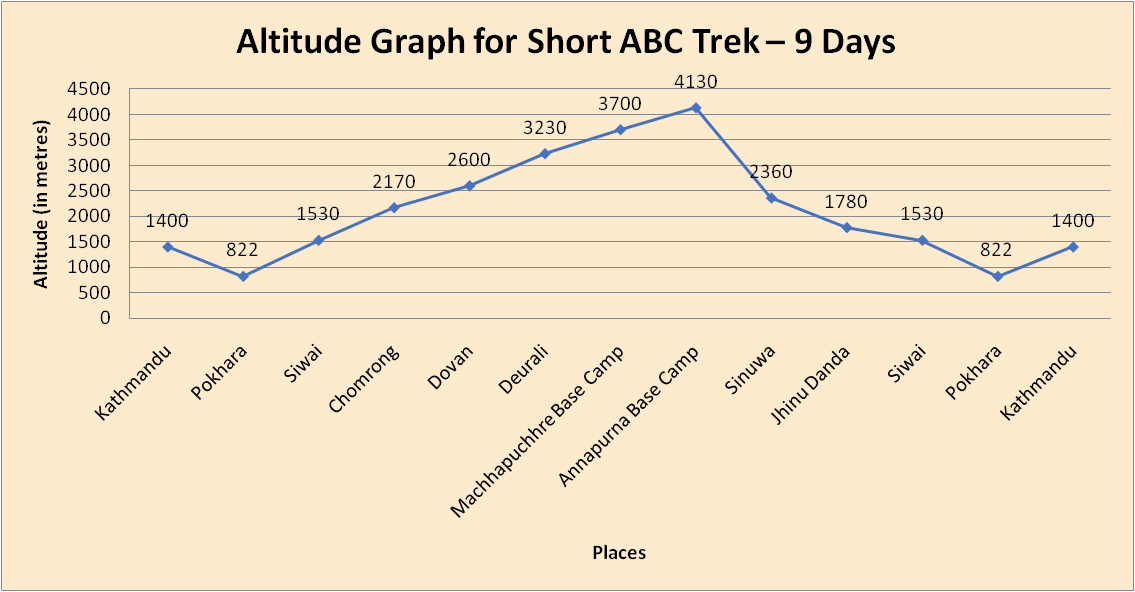
Altitude:
1400 m
Meal:
Breakfast

What's Included

  • Airport Pickup & Drop: Private transfers from Tribhuwan International Airport in Kathmandu to your hotel upon arrival and return transfer at departure.
  • Accommodation in Kathmandu & Pokhara: Two nights in 3-star hotels, offering comfortable rooms, warm bedding, and convenient access to the city’s attractions.
  • All Trekking Permits and Taxes: Includes TIMS (Trekkers’ Information Management System) card and Annapurna Conservation Area Permit (ACAP), ensuring legal access to trekking routes.
  • Domestic Flight(s): Kathmandu to Pokhara, providing a scenic aerial view of the Himalayas and reducing travel time.
  • During Trek:
    • Accommodation in tea houses and lodges along the trekking route.
    • All meals (Breakfast, Lunch, Dinner) and unlimited tea/coffee during the trek.
    • Services of a professional guide, including their food, accommodation, insurance, and salary.
    • First aid kit carried by the guide for emergencies.
    • Public transportation during transfers included in the itinerary.

What's Excluded

  • Personal Expenses: Snacks, souvenirs, laundry, phone calls, and other incidental costs.
  • Trekking Gears: Sleeping bags, trekking poles, or any personal equipment not mentioned in the inclusion list.
  • Tips for Staff: Gratuities for guides, porters, and drivers are customary and recommended at the end of the trek.
  • Beverages & Mineral Water: Bottled drinks or imported beverages.
  • Travel Insurance: Highly recommended to cover emergencies, high-altitude trekking risks, and evacuation.
  • Porters (Optional): While hiring porters is not mandatory, it is highly recommended for carrying heavy luggage. Each porter can carry up to 25 kg, ideally shared between two trekkers for convenience.

Essential Info

Add-Ons

Trekkers can enhance their Short ABC Trek experience with optional services and activities that provide additional comfort or adventure.

  • Sightseeing in Kathmandu: Pre- or post-trek sightseeing options include Pashupatinath Temple, Boudhanath Stupa, Patan Durbar Square, and Swayambhunath (Monkey Temple).
  • Porter Services: Hire porters to carry your heavy backpacks, allowing you to trek more comfortably and enjoy the scenery.
  • Domestic Flights: Upgrade or add scenic mountain flights for enhanced Himalayan views.
  • Helicopter Services: Optional helicopter ride for a unique aerial experience or quick transport in emergencies.
  • Private Transportation: Customize transfers in private vehicles for comfort and convenience.

These add-ons allow trekkers to personalize their journey, whether for cultural exploration, enhanced comfort, or unique experiences in the Annapurna region.

Best Season to Trek

Choosing the right season for the Short Annapurna Base Camp (ABC) Trek is essential to ensure clear mountain views, pleasant weather, and a safe trekking experience. The Annapurna region experiences four distinct seasons, each offering a unique experience, but some are more suitable for trekking than others.

  1. Autumn (September – November):
    Autumn is widely regarded as the best season for trekking in Nepal. After the monsoon rains, the skies are clear, offering spectacular panoramic views of the Annapurna range, Machhapuchhre (Fishtail), Dhaulagiri, and surrounding peaks. Daytime temperatures are moderate, ranging between 15–20°C at lower altitudes, while nights are cool but manageable. The forests and hillsides are lush and green, making the scenery exceptionally vibrant. Autumn is also a culturally vibrant season, coinciding with major festivals such as Dashain and Tihar, allowing trekkers to experience traditional Nepalese celebrations in the villages along the route.
  2. Spring (March – May):
    Spring is another excellent trekking season, characterized by mild temperatures, blossoming rhododendrons, and fresh greenery along the trails. This is the perfect season for nature lovers and photographers, as the hills and valleys are covered with colorful flowers, making every step along the trail visually rewarding. The weather is generally stable, with minimal rainfall and good visibility of the Annapurna and Dhaulagiri ranges. While spring is slightly warmer than autumn, trekkers should still be prepared for cold mornings and nights at higher altitudes.
  3. Winter (December – February):
    Winter trekking is possible but suited mainly for experienced trekkers who are prepared for cold conditions. Daytime temperatures in the Annapurna region can drop below 0°C at high altitudes, and snow may cover the trail, particularly near Annapurna Base Camp (4,130m). On the positive side, winter offers clear skies and unobstructed mountain views, with fewer trekkers on the trail, ensuring a peaceful trekking experience. Trekkers attempting the Short ABC Trek in winter must carry warm clothing, sleeping bags, and appropriate footwear for icy conditions.
  4. Monsoon (June – August):
    The monsoon season is generally not recommended for trekking in the Annapurna region. Heavy rainfall causes slippery trails, leeches, and potential landslides, which can make trekking dangerous. Additionally, clouds and mist obscure mountain views, making it difficult to appreciate the natural beauty of the region. While the surrounding landscapes are lush and green during this period, the risks often outweigh the rewards. Trekkers who choose this season should be experienced, well-prepared, and flexible with their schedule.

Summary of Seasons:

  • Autumn (Sept–Nov): Clear skies, moderate temperatures, cultural festivals, ideal for mountain photography.
  • Spring (Mar–May): Mild weather, rhododendron blooms, scenic landscapes, stable conditions.
  • Winter (Dec–Feb): Cold temperatures, snow-covered trails, fewer trekkers, clear mountain views.
  • Monsoon (Jun–Aug): Heavy rainfall, slippery trails, landslide risk, poor visibility; trekking not recommended.

Food Availability

During the Short ABC Trek, food is available at tea houses and lodges along the trekking route, catering to both local tastes and international preferences. Meals are freshly prepared, providing necessary nutrition and energy for daily trekking.

  1. Breakfast:
    Breakfast is served early to prepare trekkers for a full day of hiking. Typical options include:
  • Nepali-style breakfast: Porridge, dal bhat (rice and lentils), and tea or milk.
  • Western options: Bread, toast, pancakes, eggs, French toast, and oatmeal.
  • Fresh fruits, butter, jam, and honey may also be available at some tea houses.
  1. Lunch:
    Lunch is often served as a hot, hearty meal to keep energy levels up during long trekking hours. Options include:
  • Dal Bhat (rice and lentil soup): Traditional Nepali meal with vegetables, pickles, and sometimes meat.
  • Western dishes: Noodles, pasta, fried rice, soups, sandwiches.
  • Snacks: Energy bars, chocolate, or biscuits are widely available at tea houses.
  1. Dinner:
    Dinner is usually similar to lunch but may include additional local specialties such as:
  • Momo (dumplings): Steamed or fried, filled with vegetables or meat.
  • Dhido or local porridge: Traditional grains boiled into thick, filling dishes.
  • Hot beverages: Tea, coffee, or hot chocolate to warm trekkers at high altitudes.

Tips for Food:

  • Vegetarian and non-vegetarian options are available, but it is advisable to carry snacks and energy bars for higher altitudes where choices may be limited.
  • Drink plenty of water to stay hydrated. Bottled water, purification tablets, or boiled water is recommended.

Food Summary:

  • Breakfast: Porridge, eggs, pancakes, toast, tea/coffee.
  • Lunch: Dal bhat, noodles, pasta, soups, sandwiches.
  • Dinner: Dal bhat, momo, dhido, hot drinks.
  • Snacks: Energy bars, chocolate, biscuits, nuts.

By relying on the tea houses along the trail, trekkers enjoy fresh, nutritious meals while experiencing Nepali hospitality and local flavors throughout their journey.

Accommodation

During the Short ABC Trek, accommodation is provided in tea houses and lodges along the trekking route. These accommodations are designed to give trekkers a safe, warm, and comfortable place to rest after long hours of hiking, while still maintaining an authentic Nepalese trekking experience.

  1. Tea Houses:
    Tea houses are the most common form of accommodation in the Annapurna region. They are family-run lodges that offer basic facilities and an authentic cultural experience. Key features include:
  • Twin-sharing rooms: Most rooms accommodate two people with simple bedding.
  • Shared bathrooms: Higher-altitude tea houses may have shared toilets and washing facilities. Some lodges provide attached bathrooms at a slightly higher cost.
  • Heating: Many tea houses offer wood or kerosene stoves to keep rooms warm during cold nights.
  • Meals included: Breakfast, lunch, and dinner are usually available on-site.
  • Local hospitality: Staying in tea houses allows trekkers to interact with local families, learning about Gurung, Magar, or Thakali culture
  1. Lodges:
    In slightly larger villages or lower altitudes, trekkers may find small lodges offering more comfortable accommodations than standard tea houses. Features include:
  • Private rooms with attached bathrooms in some lodges.
  • Hot showers (availability depends on altitude and fuel).
  • Dining areas: Spacious areas to enjoy meals and relax after trekking.
  • Electricity and Wi-Fi: Available in some lodges, often powered by solar panels.

Accommodation Tips:           

  • Booking in advance is not always required, as tea houses operate on a first-come, first-served basis, but during peak season (autumn and spring), early booking is recommended.
  • Staying in the same lodge where you dine reduces costs for both the trekkers and lodge owners.
  • Always carry cash in small denominations, as card payments are rarely accepted in high-altitude lodges.

Summary:

  • Twin-sharing rooms with bedding.
  • Shared or attached bathrooms (depending on lodge).
  • Wood or kerosene stove for heating.
  • On-site meals (breakfast, lunch, dinner).
  • Opportunity to experience local culture and hospitality.

Difficulty of the Short ABC Trek

The Short Annapurna Base Camp Trek is moderate to challenging, making it suitable for trekkers with basic to intermediate fitness levels. While it is shorter than the classic 14-day ABC trek, it still presents physical and environmental challenges.

Factors Affecting Difficulty:

  • Terrain: The trail includes steep ascents, rocky paths, suspension bridges, river crossings, and uneven trails. Some sections require careful footing, particularly near Annapurna Base Camp.
  • Altitude: The trek reaches 4,130 meters at Annapurna Base Camp, which can trigger mild to moderate altitude sickness in some individuals. Proper acclimatization and hydration are essential.
  • Daily Hiking: Trekking involves 4–8 hours per day depending on the section, with varying inclines.
  • Weather Conditions: Weather in the mountains can be unpredictable, with sudden rain, wind, or snow, especially at higher altitudes.

Summary:

  • Moderate to challenging terrain.
  • High-altitude trekking up to 4,130 meters.
  • Daily hiking of 4–8 hours.
  • Weather variability at higher elevations.
  • Requires good fitness, stamina, and preparation.

Travel Insurance

Travel insurance is highly recommended for the Short ABC Trek. The mountainous terrain, high altitudes, and remote locations make comprehensive insurance a necessary safety measure.

Insurance Coverage Should Include:

  • Medical emergencies: Coverage for illness, injury, or hospitalization during trekking.
  • Emergency evacuation: Helicopter or vehicle rescue in case of accidents or severe altitude sickness.
  • Trip cancellation: Protection against unforeseen circumstances such as flight delays, illness, or political unrest.
  • Lost or stolen gear: Compensation for lost luggage, trekking equipment, or personal items.
  • High-altitude trekking coverage: Ensure your policy covers activities up to at least 4,500 meters for the Short ABC Trek.

Tips:

  • Carry a copy of your insurance documents during the trek.
  • Some insurance providers offer on-demand evacuation coverage specifically for the Himalayas.

Altitude Sickness

Altitude sickness, also called acute mountain sickness (AMS), can affect trekkers as they ascend above 2,500 meters, making awareness and prevention crucial.

Symptoms of Altitude Sickness:

  • Headache and dizziness.
  • Fatigue and shortness of breath.
  • Nausea, vomiting, or loss of appetite.
  • Difficulty sleeping or insomnia.

Prevention:

  • Acclimatize gradually: Ascend slowly and avoid rapid elevation gain.
  • Hydrate frequently: Drink at least 3–4 liters of water per day.
  • Avoid alcohol and smoking: These can exacerbate symptoms.
  • Take rest days if needed: Allow your body to adjust.

Treatment:

  • Descend immediately if symptoms worsen.
  • Take medication such as Diamox (Acetazolamide) under medical guidance.
  • Oxygen supplementation is available at some higher tea houses.

Summary:

  • Symptoms: Headache, nausea, fatigue, insomnia.
  • Prevention: Gradual ascent, hydration, rest, avoid alcohol.
  • Treatment: Descend, medication, oxygen therapy if necessary.

Guide and Safety Measures

The Short ABC Trek is an adventure through rugged Himalayan terrain, and having an experienced guide is essential for both safety and enjoyment. Our trained guides are not just navigators—they are cultural ambassadors, safety experts, and logistical support, ensuring your trek is both memorable and secure.

Roles and Responsibilities of a Trek Guide:

  1. Knowledge of the Trail:
  • Guides are familiar with every section of the trekking route, including altitudes, village stops, and potential hazards.
  • They provide insights into shortcuts, scenic viewpoints, and best photo opportunities.
  • Their expertise ensures you avoid unsafe trails and make the trek as smooth as possible.
  1. Safety and Emergency Management:
  • Guides continuously monitor trekkers’ health, especially for signs of altitude sickness or exhaustion.
  • They carry a well-stocked first aid kit with supplies for minor injuries and emergencies.
  • In case of severe illness or accident, they coordinate emergency evacuation, either by porters or helicopter if necessary.
  • Guides train trekkers in safety protocols, including river crossings, rocky terrain, and slippery slopes.
  1. Cultural and Environmental Guidance:
  • Guides explain local traditions, customs, and rituals, enriching the trekking experience beyond natural beauty.
  • They encourage responsible trekking, minimizing litter, respecting local communities, and preserving flora and fauna.
  • Guides act as translators when interacting with local communities in villages like Ghandruk, Chomrong, and Jhinu Danda.
  1. Logistical Support:
  • Arrange accommodations and meals in tea houses and lodges.
  • Help carry trekking gear and supplies if required.
  • Assist with permitting and TIMS card management.
  1. Motivation and Assistance:
  • Provide guidance on trekking pace and rest breaks suitable for all fitness levels.
  • Encourage and motivate trekkers during steep climbs or long walking days.
  • Help resolve minor issues like gear adjustment, footwear problems, or basic trekking discomforts.

Summary :

  • Expertise in trail navigation and alternative routes.
  • Monitoring of trekkers’ health and early detection of altitude sickness.
  • First aid and emergency evacuation coordination.
  • Cultural insights and translation assistance.
  • Logistical support: accommodation, meals, permits, and porter coordination.
  • Motivation and guidance on trekking pace and comfort.

With a knowledgeable guide, the Short ABC Trek is not just a physical journey but a safe, cultural, and educational adventure. Guides ensure trekkers enjoy panoramic views, local interactions, and Himalayan landscapes with minimal risks.

Booking Procedure

Booking the Short ABC Trek is straightforward, transparent, and designed to ensure that your trekking experience starts stress-free and organized.

Step 1: Choose Your Trek Package

  • Visit our website or contact our trekking team directly.
  • Select the Short ABC Trek 9 Days package based on group size, private or group options, and desired inclusions (like flights or porters).

Step 2: Submit Required Documents

  • Send scanned copies of your passport, passport-size photo, and travel insurance.
  • Provide arrival and departure flight details.
  • If you’re bringing your own gear or have dietary restrictions, inform the team at this stage.

Step 3: Deposit Payment

  • Pay a 10% deposit to confirm your booking.
  • Payment can be made via bank transfer, Western Union, or online payment.

Step 4: Confirmation and Itinerary

  • Once your deposit is received, you will receive a confirmation email with the full itinerary, trekking permits information, and tips for preparation.
  • This includes packing lists, health advisories, and weather information.

Step 5: Final Payment Upon Arrival

  • The remaining balance can be paid in cash (Nepalese Rupees), bank transfer, or credit card upon arrival in Kathmandu.
  • Receipts and confirmations are provided for transparency.

Step 6: Pre-Trek Briefing

  • Meet your guide for a detailed pre-trek briefing.
  • Discuss itinerary, trekking rules, safety measures, and emergency procedures.
  • Final adjustments to schedule or gear requirements are made before departure.

Step 7: Trekking Begins

  • After pickup from your hotel in Kathmandu, embark on the flight to Pokhara and begin the Short ABC Trek with confidence, knowing all logistical and safety arrangements are handled.

Equipment List

  • Quick-dry trekking shirts and pants.
  • Thermal inner layers for cold nights.
  • Comfortable hiking socks and underwear.
  • Rain jacket or poncho.
  • Trekking poles for stability.
  • Daypack for daily essentials.
  • Water bottles or hydration system.
  • Headlamp with extra batteries.
  • Insulated jacket or fleece.
  • Warm hat, gloves, and scarf.
  • Waterproof hiking boots with good grip.
  • Gaiters (optional) for snow or mud.
  • Travel towel, soap, toothpaste, toothbrush.
  • Wet wipes and hand sanitizer.
  • First aid kit including bandages, blister pads, and personal medications.
  • Sunscreen, sunglasses, and lip balm.
  • Mobile phone and charger.
  • Power bank.
  • Camera for capturing breathtaking landscapes.
General Equipments
  • Passport, trekking permits, and copies.
  • Cash in small denominations (Nepalese Rupees).
  • Snacks such as energy bars, chocolate, or dried fruits.

FAQ

The trek is moderate to challenging, involving daily hikes of 4–8 hours over uneven terrain and altitudes up to 4,130 meters. Trekkers should have good stamina and fitness, though beginners can attempt it with preparation and a guide.
You will need the Trekkers’ Information Management System (TIMS) card and the Annapurna Conservation Area Permit (ACAP). Our team can help obtain these permits before or during the trek.
Yes, hiring a guide or porter is recommended, especially for first-time trekkers or those carrying heavy backpacks. A porter can carry up to 25 kg, and guides ensure safety, navigation, and cultural insights.
The best seasons are spring (March to May), when rhododendrons bloom, and autumn (September to November), with clear skies and excellent mountain views. Avoid monsoon (June–August) due to slippery trails and landslides, and winter (December–February) if unprepared for cold weather.
Accommodation is primarily in tea houses and lodges, offering twin-sharing rooms, shared or attached bathrooms, heating, and meals. Facilities are more basic at higher altitudes but provide essential comfort.
Prevent altitude sickness by: • Ascending gradually and allowing time to acclimatize. • Drinking plenty of water and avoiding alcohol. • Recognizing early symptoms like headache, fatigue, and nausea. • Descending immediately if symptoms worsen, with medication or oxygen if needed.
Trip Price

On Request

Talk To Trip Expert

expert image

Anjan Dhital

Trip Expert
Have Any Questions?
Whatsapp/Viber +977-9810271256
Share this Trip
Translate »