

Upper Mustang Tiji Festival Jeep Tour – 12 Days Complete Guide (2026)
- March 25, 2026
Introduction: A Journey to the Forbidden Kingdom
Imagine standing within the ancient mud-brick walls of Lo Manthang, the last remaining Tibetan Buddhist kingdom, as masked monks whirl in sacred dance while centuries-old drums echo through the arid Himalayan desert. This is the Upper Mustang Tiji Festival —a three-day spectacle of faith, myth, and cultural preservation that draws travelers from across the globe.
The 12-day Upper Mustang Tiji Festival Jeep Tour offers the perfect blend of cultural immersion and off-road adventure. Unlike traditional trekking, this journey takes you through Nepal’s most remote landscapes in the comfort of a 4WD jeep, making the forbidden kingdom accessible without sacrificing the thrill of exploration .
What is the Tiji Festival?
The Tiji Festival, also known as Tenchi, is an ancient Buddhist ritual celebrated annually in Lo Manthang, Upper Mustang. The name derives from Tenpa Chirim, meaning “benefit of Buddha’s teachings and all sentient beings” .
The Myth Behind the Festival
The festival reenacts a captivating mythological story: centuries ago, a demon created havoc in the Mustang region, causing severe water shortages in this already arid land. Dorje Jono (also called Vajrakila or Vajrakumar), a deity in Vajrayana Buddhism, was forced to fight his own demonic father to save the kingdom. After an epic battle, Dorje Jono emerged victorious, banishing the demon and restoring peace and prosperity .
Historical Significance
The Tiji Festival traces its origins to the early 15th century, introduced by Khenchen Sonam Lhundrup, son of Mustang’s second king. It was later revived in the 17th century by King Samdup Rabten and Sakya master Ngawang Kunga Sonam, who performed special Vajrakila rituals for peace and protection. The tradition was restored again in 1963 and continues uninterrupted to this day .
When is Tiji Festival 2026?
The Tiji Festival follows the Tibetan lunar calendar and typically falls in May. For 2026, the festival will be celebrated on:
Date Day
- May 14, 2026 First Day
- May 15, 2026 Second Day
- May 16, 2026 Third Day
Plan your arrival in Lo Manthang by May 13, 2026, to settle in before the festivities begin.
What Happens During the Three Days?
Day 1 – The Opening Rituals: The festival begins with monks from Chhode Monastery performing preliminary rituals. A massive traditional thangka (religious painting) nearly the height of a two-story building is displayed from the King’s Palace—a highlight visible only during Tiji .
Day 2 – The Sacred Dances: Masked monks perform intricate cham dances, symbolizing the preparation for battle against negative forces. Each dance step represents elements of Vajrakila meditation practice .
Day 3 – The Victory & Purification: The final day features the climactic reenactment of Dorje Jono’s victory. Monks dramatically cast out tormas (ritual cakes) to symbolically banish negativity and evil spirits from the region, based on astrological guidance. The celebration concludes with feasting and community gatherings .
Why Choose the Jeep Tour Over Trekking?
- Feature Jeep Tour Trekking
- Physical Difficulty Easy – suitable for all ages Moderate to Strenuous
- Duration 12 days 15-18 days
- Max Altitude 3,950m (Lo La Pass) Similar but slower ascent
- Comfort 4WD vehicle, lodge stays Walking daily, lodge stays
- Best For Cultural focus, time-limited travelers Adventure seekers, hikers
- The Jeep Tour eliminates the physical strain of long-distance trekking while still allowing you to experience the rugged beauty of Upper Mustang. You’ll cover more ground, visit more villages, and arrive in Lo Manthang well-rested for the festival .
Detailed 12-Day Itinerary
Day 1: Arrival in Kathmandu (1,350m)
Upon arrival at Tribhuvan International Airport, your tour representative will greet you and transfer you to your hotel in Thamel, Kathmandu’s vibrant tourist hub. Spend the afternoon exploring the bustling streets, handicraft shops, and cozy cafes. In the evening, attend a briefing session where your guide will explain the journey ahead, share insights about the Tiji Festival, and answer any questions .
Day 2: Kathmandu to Pokhara (822m) – 25-min Flight
Take a scenic 25-minute flight from Kathmandu to Pokhara. Choose a window seat for breathtaking views of the Annapurna, Dhaulagiri, and Machhapuchhre (Fishtail) mountain ranges. Upon arrival, check into your hotel and enjoy a free afternoon. Options include:
A relaxing boat ride on Phewa Lake
Visiting the World Peace Pagoda for sunset views
Exploring Lakeside’s shops and restaurants
Day 3: Pokhara to Tatopani (1,190m) – 5-6 Hours Drive
Your jeep adventure begins! Depart Pokhara in a sturdy 4WD jeep, following the Kali Gandaki River—one of the deepest gorges in the world. The road winds between the Annapurna and Dhaulagiri massifs, offering spectacular mountain views at every turn. Arrive at Tatopani, famous for its natural hot springs. Soak in the mineral-rich waters to soothe travel fatigue—locals believe these springs have healing properties .
Day 4: Tatopani to Kagbeni via Jomsom & Muktinath (2,850m) – 5-6 Hours Drive
Today’s journey takes you deeper into the valley. Stop at Marpha, a charming Thakali village renowned for its apples, apple pies, and apple brandy. Continue to Jomsom, the district headquarters, before taking a detour to Muktinath Temple (3,710m)—a sacred pilgrimage site for both Hindus and Buddhists. Witness pilgrims bathing under 108 water spouts and lighting butter lamps. End the day at Kagbeni, the official gateway to Upper Mustang, where your permits will be checked .
Day 5: Kagbeni to Charang (Tsarang) – 4-5 Hours Drive
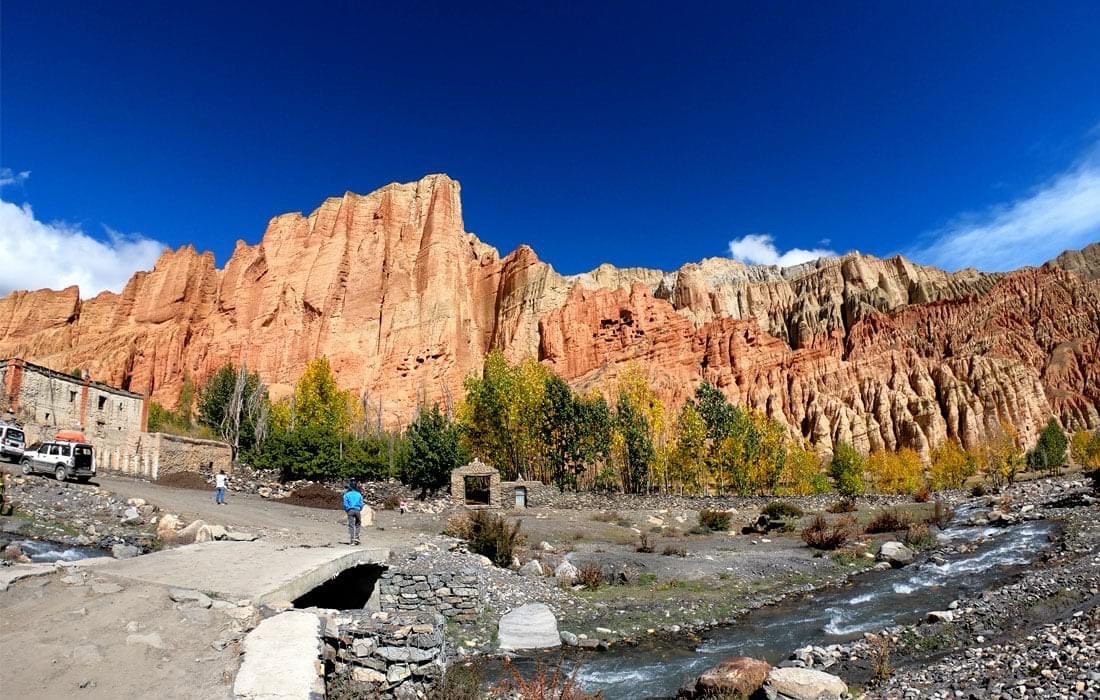
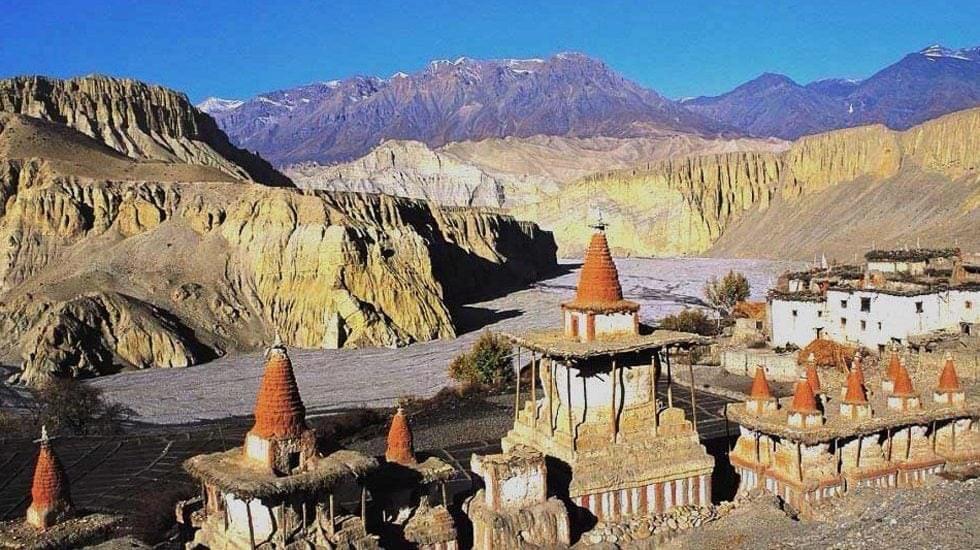
Enter the restricted Upper Mustang region—a landscape that transforms into a surreal desert plateau of red, ochre, and grey cliffs dotted with ancient caves and stupas. Visit Chhusang, Samar, and Ghiling en route. Arrive at Charang (3,560m), a village with a rich history. Explore its ancient monastery and fortress-style houses that reflect Tibetan architectural influence .
Day 6: Charang to Lo Manthang (3,810m) – 2-3 Hours Drive
A short but unforgettable drive brings you to Lo Manthang, the walled capital of the former Kingdom of Lo. Pass the longest mani wall in Upper Mustang and marvel at the stark, beautiful landscape. Upon arrival, check into your lodge and take a preliminary walk through the ancient city. Visit the King’s Palace, a five-story whitewashed structure—though currently not open for interior visits, the exterior is magnificent .
Day 7-9: Three Days of Tiji Festival Celebration (3,810m)
Three full days are dedicated to experiencing the Tiji Festival in all its glory:
Day 7 (Festival Day 1): Attend the opening ceremonies at the monastery courtyard. Witness the display of the giant thangka and observe monks preparing the sacred space. Visit Namgyal Gompa and Tingkhar village in the morning before the afternoon rituals begin.
Day 8 (Festival Day 2): Explore Chhoser village and its famous sky caves—ancient cliff dwellings carved into the rock face. If you’re lucky, you might spot blue sheep along the way. Return to Lo Manthang for the afternoon’s masked dances and ceremonies.
Day 9 (Festival Day 3): The festival’s grand finale! Witness the dramatic expulsion of the tormas (ritual cakes), symbolizing the banishment of evil. Explore Champa Lhakang (a temple with a massive Buddha statue) and the Thubchen Gompa with its exquisite mandala paintings. Join locals in the final celebrations.
Day 10: Lo Manthang to Jomsom (2,720m) – 5-6 Hours Drive
Bid farewell to Lo Manthang and begin the return journey. Retrace your route through Charang, Ghami, and Kagbeni, where permits are again checked. Arrive in Jomsom by evening. Enjoy exploring the local market, sampling apple products, and perhaps tasting local apple whiskey .
Day 11: Jomsom to Pokhara (822m) – 7-8 Hours Drive
Descend from the high-altitude desert back to the lush greenery of the Pokhara Valley. The return drive offers a different perspective on the landscapes you crossed earlier. Check into your hotel and enjoy a relaxing evening by Phewa Lake .
Day 12: Pokhara to Kathmandu – 8-9 Hours Drive or Flight
Drive back to Kathmandu (205 km) following the Trishuli and Marsyangdi Rivers. Alternatively, take a short flight back. Upon arrival, transfer to your hotel. Spend your final evening shopping for souvenirs or enjoying a farewell dinner .
Permits & Costs for 2026
Upper Mustang Restricted Area Permit – Important 2026 Update!
Starting 2026, the permit structure for Upper Mustang has been significantly revised:
Previous System New System (2026 Onwards)
USD 500 for fixed 10 days (regardless of stay) USD 50 per person per day
No flexibility Pay only for days you actually spend in Upper Mustang
This change makes shorter trips more affordable and offers greater flexibility for customized itineraries .
Important Regulations:
- A minimum of two participants in a group is still required
- A government-licensed guide is mandatory throughout your stay in Upper Mustang
Other Permits Required:
- Annapurna Conservation Area Permit (ACAP)
- TIMS Card (Trekkers’ Information Management System)
Tour Costs for 2026
Typical costs for a 12-day Upper Mustang Tiji Festival Jeep Tour:
Group Size Cost Per Person (USD)
- 1 person $2,499 – $3,200
- 2 persons $2,199 – $2,299
- 3-4 persons $1,899 – $2,199
- 5+ persons $1,699 – $1,999
Note: Prices vary by operator and inclusions. Group tours are generally more affordable .
What’s Typically Included:
- Airport transfers
- Accommodation (3-star hotels in cities, tea houses/lodges during the tour)
- All meals during the tour (breakfast, lunch, dinner)
- English-speaking licensed guide
- 4WD jeep with experienced driver
- All permits (Upper Mustang Special Permit, ACAP, TIMS)
- Guide’s salary, insurance, and expenses
What’s Not Included:
- International airfare
- Nepal visa fee
- Travel insurance (mandatory)
- Personal expenses (snacks, beverages, souvenirs)
- Tips for guide and driver
- Extra nights in Kathmandu due to itinerary changes
Preparation Guide
Physical Preparation
While the jeep tour is rated Easy, you’ll still be at high altitudes (up to 3,950m) and may do short walks to monasteries and villages. Being in good general health is recommended. No intense training is required .
Packing List Essentials
Clothing:
- Warm layers: fleece jacket, down jacket (temperatures can drop below freezing at night)
- Waterproof/windproof outer shell
- Comfortable walking shoes/boots
- Thermal underwear
- Hat, gloves, and scarf
- Sun hat and sunglasses
Other Essentials:
- Water bottle with purification tablets/filter (plastic bottles are discouraged)
- High SPF sunscreen and lip balm
- Personal medications and basic first aid
- Power bank (electricity can be unreliable)
- Headlamp/flashlight
- Camera with extra batteries
- Cash (ATMs are unavailable in Upper Mustang)
Documents:
- Passport with at least 6 months validity
- Nepal visa (available on arrival at KTM airport)
- Travel insurance documents
- Passport photos for permits
Acclimatization Tips
- Drink plenty of water throughout the journey
- Avoid alcohol during the first few days at altitude
- Walk slowly and listen to your body
- Inform your guide immediately if you experience headache, nausea, or dizziness
Cultural Etiquette & Responsible Tourism
Respecting Local Customs
- Photography: Always ask permission before photographing people, especially monks and during religious ceremonies. Photography may be restricted inside monasteries and during certain rituals.
- Dress Modestly: When visiting monasteries or during the festival, cover shoulders and knees. Remove shoes before entering temple buildings.
- Circumambulation: Walk around stupas, mani walls, and monasteries in a clockwise direction.
- Pointing: Avoid pointing your feet at people or religious objects.
Environmental Responsibility
- No plastic bottles: Use reusable water bottles. Most lodges offer boiled water for a small fee.
- Leave no trace: Carry out what you carry in.
- Support local economy: Buy from local shops and eat at local establishments .
Frequently Asked Questions
- Is the Tiji Festival Jeep Tour suitable for children?
Yes, the tour is rated Easy and suitable for children aged 5 and above, provided they are in good health . - What is the maximum altitude on this tour?
The highest point is Lo La Pass at 3,950 meters (12,959 feet). Lo Manthang itself is at 3,810 meters . - How is the road condition?
The roads are rugged—expect a bumpy but thrilling ride. 4WD jeeps are specially equipped for these conditions . - What about mobile and internet connectivity?
Mobile service is available in Pokhara and Jomsom but is limited or absent in Upper Mustang. WiFi is available at some lodges for a fee . - Do I need travel insurance?
Yes, travel insurance is mandatory. Ensure your policy covers high-altitude travel (up to 4,000m) and emergency evacuation . - What is the best time to visit Upper Mustang?
May is ideal because of the Tiji Festival. April-October generally offers good weather, with May being particularly pleasant .
Conclusion
The Upper Mustang Tiji Festival Jeep Tour is more than a vacation—it’s a once-in-a-lifetime opportunity to witness a living tradition that has survived for over 800 years in one of the world’s most remote and culturally rich regions. From the dramatic landscapes of the Kali Gandaki Gorge to the sacred dances within Lo Manthang’s ancient walls, every moment of this 12-day journey is imbued with wonder and meaning.
With the new permit system for 2026 making travel more flexible and affordable, there’s never been a better time to embark on this adventure. Whether you’re a culture enthusiast, a photographer, or simply a curious traveler, the Tiji Festival awaits.