



Blog
Discovering the flora and fauna of NEPAL : CHITWAN NATIONAL PARK
The scenic and a breathtaking adventurous subtropical lowland of southern Nepal , Chitwan National Park stands as one of the interesting site for wildlifes conservation in whole asia. In recogonition of its unique biological resources of outstanding universal value, UNESCO designated Chitwan National Park as a World Heritage Site in 1984.
Travellers seeking for exploring nature except snowcapped mountains and thrilling jungle safaris, vibrant cultural immersion and canoe rides ; Chitwan National Park may be the best eco-tourism destination.
Prolouge of the wondering Chitwan National Park :
Chitwan National Park is where Nepal’s conservation journey began. Established in 1973 as the country’s first national park, it covers a vast stretch of subtropical lowlands in south-central Nepal. The landscape is a stunning mix of river valleys and rolling hills, creating a perfect sanctuary for wildlife.
This park is a crucial refuge for some of the world’s most endangered species also designated among the most precious natural treasures on Earth. It holds the distinction of being Nepal’s first national park, a pioneering step in the nation’s commitment to conservation. World-renowned as one of Asia’s best wildlife viewing destinations, it is a realm where the impossible becomes probable, where the shadows reveal the rarest creatures on the planet. It is famous for protecting the endangered one-horned rhinoceros ghariyal-gohi ,Bengal tiger, offering a refuge to these majestic beasts against the encroaching tide of modernity.This is a place where the subtropical lowlands of the Terai burst forth in a riot of life. Here, the air is alive with the calls of over 600 bird species, the ground trembles under the weight of giants, and the rivers glide silently through ancient forests. Join us as we unravel the mysteries of Chitwan, exploring every facet of its existence, from the smallest insect to the mightiest predator, and from the logistics of your journey to the depths of its cultural heart.
The “Heart of the Jungle”: Geography and a Living Mosaic
Before we set foot on the trail, we must understand the stage upon which this drama plays out. Chitwan is not merely a flat expanse of grass; it is a complex topographical marvel. Covering 952.63 km2 (367.81 sq mi), the park sits in the Terai region of southern Nepal. The elevation creates a diverse theater of life, starting from a modest 100 m (330 ft) in the river valleys and climbing to 815 m (2,674 ft) in the Sivalik Hills.
The park is a biological reservoir, contiguous with Parsa National Park to the east and India’s Valmiki National Park to the south. This coherent protected area, known as the Tiger Conservation Unit (TCU) Chitwan-Parsa-Valmiki, covers a massive 2,075 km2 (801 sq mi), allowing animals to roam freely across borders, a vital necessity for genetic diversity.
The lifeblood of this landscape is the Narayani-Rapti river system, forming a natural boundary to human settlements. But the true character of Chitwan lies in its vegetation. The typical vegetation of the Inner Terai is Himalayan subtropical broadleaf forests with predominantly sal trees covering about 70% of the national park area. These majestic trees create a cathedral-like canopy. However, it is the Terai-Duar savanna and grasslands covering about 20% of the park’s area that capture the imagination. Here, among the elephant grass (Saccharum ravennae)—some of the tallest grasses in the world—the giants hide.
A jewel in this crown is the Bishajari Lake, a Ramsar site and Wetland of international importance. This serene expanse of water is a critical habitat for marsh mugger crocodiles and migratory birds, a tranquil counterpoint to the dense jungle.
The Guardians of the Mist: The Tharu People
Just as the Sherpa are the stewards of the high Himalayas, the Tharu people are the soul of the Terai. Living in the buffer zone with an area of 729.37 sq km connected by four districts—Chitwan, Parsa, Makwanpur, and Nawalparasi—the Tharu have coexisted with the wildlife for generations.
Historically, the Terai was notorious for malaria, a disease that kept outsiders at bay but to which the Tharu developed a surprising resistance. This isolation allowed them to cultivate a unique culture, distinct from the hill tribes of Nepal. Their traditions are deeply rooted in the natural world. A visit to a Tharu village reveals intricately decorated homes with walls painted in vibrant clay relief art, depicting tigers, peacocks, and flowers.
The cultural highlight for any visitor is the evening cultural program, where the Tharu perform their traditional stick dance (Dhan Nach). What began as a martial art to defend against threats in the grasslands has evolved into a mesmerizing rhythmic performance. As the drums quicken and the dancers clash their sticks, you are witnessing a history of survival and harmony. They are the true guardians of this landscape, and their involvement in community forestry and anti-poaching initiatives has been crucial to the park’s success.
The Monarchs: Rhinos and the King
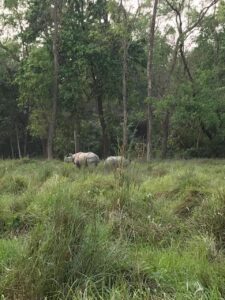
The primary draw for most travelers is the chance to encounter the Greater One-horned Rhinoceros. Chitwan boasts the second-largest population of Greater One-horned Rhinoceros in the world. Seeing these armored giants, weighing up to two tons, crashing through the undergrowth or grazing peacefully in a riverine swamp is a profound privilege. The population has recovered remarkably thanks to rigorous conservation, now numbering over 600 individuals in the park.
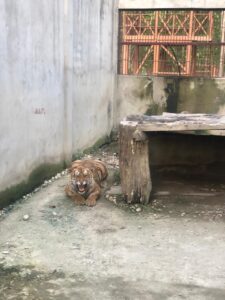
Sharing this kingdom is the “King of the Jungle,” the Bengal tiger. Chitwan is one of the National Parks in the world that has more than 128 adults tigers in the same habitat. This statistic is a testament to the park’s health. The alluvial floodplain habitat of the Terai is one of the best tiger habitats anywhere in the world.
However, spotting a tiger here is a different experience than in the arid parks of India. The tall grass and dense sal forests offer perfect camouflage. Tigers here have learned to offset their temporal activity patterns to be much less active during the day when human activity peaked, becoming phantoms of the night. A sighting, therefore, is a rare and electrifying gift, often involving a sudden, silent stare from across a riverbank or a fleeting glimpse of orange stripes melting into the green.
Beyond these icons, the park is home to the Gaur Bison (the world’s largest wild cattle) and the sloth bear, often seen shuffling through the undergrowth in search of termites. The rivers teem with the Gharial Crocodile, a strange and endangered reptile with a long, slender snout, rescued from the brink of extinction by the park’s breeding efforts.
The Call of the Wild: Things to Do in Chitwan National Park
To truly understand Chitwan, one must engage with it actively. It is not a place for passive observation; it demands participation.
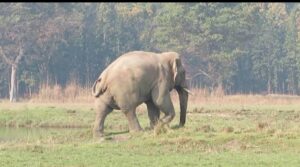
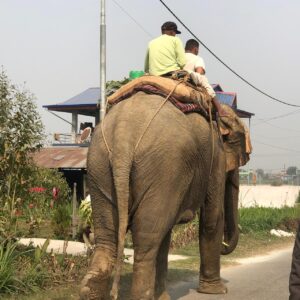
1. Go on a Jungle Safari: Whether in a jeep or atop an elephant (where regulations permit), this is the quintessential experience. The jeep safari allows you to penetrate deep into the core area, driving through the Churia Hills and down into the Madi Valley. The anticipation builds with every rustle of the grass.
2. Go Canoeing in the Rapti River: Drifting in a dugout canoe offers a water-level perspective. It is the best way to spot the mugger crocodiles basking on the banks and the vibrant array of waterfowl. The silence of the river allows you to hear the jungle breathing.
3. Visit the Breeding Centers: Chitwan is a global leader in conservation. Visiting the Elephant, Gharial Crocodile, and Vulture Breeding Center provides insight into the scientific efforts to save these species. It is heartening to see the young gharials being reared for release, a direct fight against extinction.
4. Walk Through the Jungle: For the thrill-seeker, a guided jungle walk is incomparable. Accompanied by armed naturalists, you track wildlife on foot. The smells are sharper, the sounds louder, and the adrenaline higher. You learn to read the pugmarks and understand the alarm calls of the deer.
5. Visit Beesh Hajari Taal: A trip to the Ramsar site (Bishajari Lake) is a must for bird lovers. The tranquility of the lake, surrounded by dense forest, offers a peaceful retreat and spectacular birdwatching.
6. Explore Local Villages: Take a bicycle or walk through the buffer zone villages. Witness the daily life of the Tharu, their farming practices, and their colorful traditions. It grounds the wilderness experience in the reality of the people who live next door to tigers.
Planning Your Journey: Essential Travel Information
Ready to answer the call of the wild? Here is the practical information you need to plan your adventure with ART Nepal Treks.
Getting There: The Gateway to the Wild
Chitwan National Park is easily accessible from most of the cities of Nepal.
- From Kathmandu: Every morning many tourist buses leave from Kathmandu to Sauraha near the park entrance. Alternatively, a flight to Bharatpur from Kathmandu and a 45 minute drive to Sauraha is also an option, offering a quick and scenic route.
- The Road Update: The recently constructed road at the landslide occurring Mugling-Naranghad section of East-West highway has made Chitwan more accessible than before, smoothing out a journey that was once notoriously windy.
- From Pokhara and Lumbini: The protected area is within a driving distance of 4 to 5 hours, making it a perfect triangle trip with Kathmandu and Pokhara.
Entrance Gates
There are 12 entrance gates to the park, allowing access from different regions:
- Ghatgain via Patihani
- Bhimle via Meghauli
- Khagendramalli via Bhandara
- Sauraha via Tandi (Ratna Nagar) – The most popular for tourists.
- Laukhani via Pragatinagar
- Amaltari via Danda
- Sanachuri
- Bankatta via Madi
- Kasara via Jagatpur
- Kujauli via Rajahar
- Nandabhauju
- Bagai
Entry Fees for 2026:
Conservation requires funding. The Chitwan National Park entry fees for 2026 are as follows:
- Foreigners: 2,000 NPR per person per day.
- SAARC Nationals: 1,000 NPR per person per day.
- Nepalis: 150 NPR per person per day.
- Children under 10 are free.
[Note that mandatory permits are required, and separate fees apply for activities like jeep safaris, canoeing, and guides.]
Best Time to Visit
Timing is everything in the jungle.
- October to Early March: This is the best time to visit Chitwan for pleasant 25°C temperatures. The monsoon rains have washed the dust away, leaving the jungle lush and the air clear. November, December and January offer good visibility and clear views of the Himalayas from the park’s northern edges.
- April and May: If you can tolerate the heat, this is the time for wildlife sightings. As water sources dry up, animals congregate at the remaining waterholes. Expect meltingly hot temperatures in the mid 40°Cs.
- Monsoon (Mid-June to Mid-September): Most trips run from late September to May, to avoid the monsoon rains. During this period, 80 percent of Nepal’s rain falls, turning rivers into torrents and leeches into a nuisance.
Accommodation and Food
From luxury resorts in Meghauli to cozy teahouses in Sauraha, options abound. ART Nepal Treks recommends staying in eco-friendly lodges that support the local community. Don’t miss the chance to enjoy a scrumptious breakfast in the jungle or spend a night in a watchtower, listening to the nocturnal symphony of the wild.
Frequently Asked Questions (FAQs)
Q: Is Chitwan National Park safe for travelers?
A: Absolutely. While the park is home to dangerous animals, all activities are conducted under the supervision of trained guides. The buffer zone concept and strict park rules ensure a safe distance is maintained from wildlife.
Q: What is the significance of the buffer zone?
A: The buffer zone with an area of 729.37 sq km acts as a shock absorber. It allows local communities to use forest resources sustainably, reducing conflict between humans and wildlife. The revenue from tourism is shared with these communities, incentivizing them to protect the park.
Q: Can I see a tiger easily?
A: Chitwan has a high density of tigers (more than 128 adults tigers), but the dense habitat makes sightings challenging. It requires patience and a bit of luck. Early morning safaris offer the best chances.
Q: Why is Bishajari Lake famous?
A: It is a Ramsar site, a Wetland of international importance. It is a hotspot for biodiversity, particularly for birds and crocodiles, and a serene spot for nature lovers.
Q: Do I need a guide?
A: For jungle walks and safaris inside the core area, guides are mandatory. For cultural tours in the buffer zone, a guide enhances the experience by explaining the Tharu culture and local flora.
A Note on Responsible Travel
When you visit Chitwan National Park, you are contributing to a legacy. We employ local guides, support Tharu cultural programs, and adhere to strict “Leave No Trace” principles. The park is a fragile ecosystem. The recent history of the gharial crocodile, whose population dramatically declined to only 38 wild gharials in 2003, reminds us that nature needs our help. By visiting, you fund the Gharial Conservation Project and anti-poaching units.
Come for the rhinos, stay for the culture, and leave with a heart full of the jungle’s quiet power. Chitwan is not just a park; it is a living breath of the Earth.